

EMPROTUR Bariloche (Mixed Tourism Promotion Board of San Carlos de Bariloche)
Argentina
September 2026
A data-driven destination management and marketing model designed to optimise destination promotion
Context
Growth Opportunities
Bariloche is one of Argentina’s most important tourism destinations and the gateway to Patagonia. The city welcomes more than 1.5 million visitors every year, with a strong combination of domestic and international demand driven by its air connectivity, nature and adventure offering, and the unique advantage of having two highly relevant tourism seasons: winter and summer.
However, the growing complexity of tourism demand posed a strategic challenge: understanding which source markets generate the highest economic value, how travel patterns are evolving among both established and emerging markets, which accommodation types visitors prefer, how much they spend, and what opportunities exist to diversify demand beyond peak visitation periods.
Key goals
The destination’s challenges
To design tourism strategies focused on generating greater economic value while improving the efficiency of destination management, EMPROTUR Bariloche decided to incorporate new tourism intelligence tools aimed at understanding the real economic impact of domestic and international tourism, identifying high-value source markets with growth potential, balancing the influence of traditional feeder markets during specific seasons, and optimising promotional strategies by differentiating between winter and summer.
To build this integrated view of demand, supply, visitor spending and the overall tourism experience, Bariloche established the EMPROTUR-UNRN Tourism Observatory in 2022 in partnership with the National University of Río Negro. In July 2025, the observatory incorporated the capabilities of the Data Appeal Mabrian data ecosystem, integrating data on visitor expenditure, accommodation demand, source market behaviour, traveller sentiment and destination competitiveness.
Approach
Why Data Appeal Mabrian
The Bariloche Tourism Observatory, designed to monitor the evolution of the destination’s key tourism indicators and support decision-making aligned with its strategic objectives, incorporated multiple data sources from Data Appeal Mabrian into a one-year project that analysed tourism expenditure indicators, accommodation bookings, source market behaviour, online reputation and both resident and visitor sentiment.
This partnership established a comparative baseline for a data intelligence model focused on destination management while also helping stakeholders better understand the dynamics of Bariloche’s main tourism seasons, identify priority areas for improvement and uncover untapped growth opportunities.
The methodology defined five key pillars of tourism intelligence for the destination:
- Economic Impact: Analysis of domestic and international visitor spending to identify the markets that contribute the greatest economic value and the spending categories with the strongest local impact.
- Visitor Profile: Definition of traveller archetypes based on origin, length of stay, travel party composition, accommodation preferences and behavioural patterns.
- Supply and Competitiveness: Monitoring accommodation supply, pricing evolution and how available capacity adapts to different seasons.
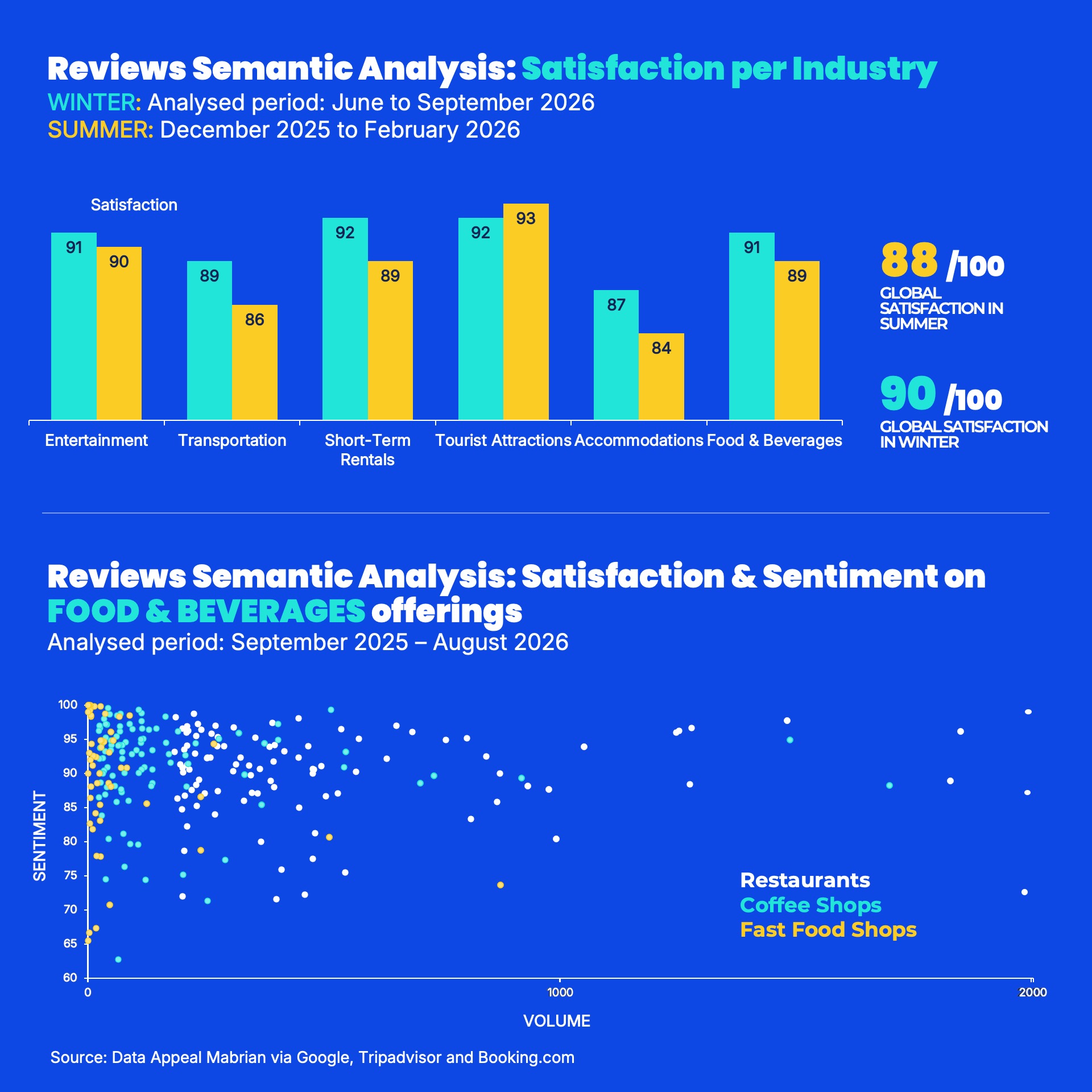
- Tourism Experience Satisfaction: Analysis of more than 282,000 digital travel footprints to understand which aspects of the visitor experience generate the highest levels of satisfaction and contribute most to the destination’s reputation.
Market Intelligence: Comparative assessment of strategic source markets to identify growth opportunities during both the winter and summer seasons.
Results
Turning data into actionable strategies
The project’s main outcome was the generation of key market insights, enabling the destination to build a unified view of visitor expenditure, demand, source markets, accommodation performance, online reputation and the overall visitor experience.
These new capabilities allow the destination to identify high-value markets, prioritise promotional investments, design differentiated strategies for winter and summer, support demand diversification efforts, improve the competitiveness of both accommodation providers and the wider tourism offering, monitor destination perception from a strategic perspective, and maximise the economic impact of both domestic and international tourism.
From an opportunities and challenges perspective, the project quantified the economic value of international tourism, which grew by +13% year-on-year, identified priority source markets based on their contribution to the destination, and highlighted the key factors driving the strong local retention of tourism expenditure.
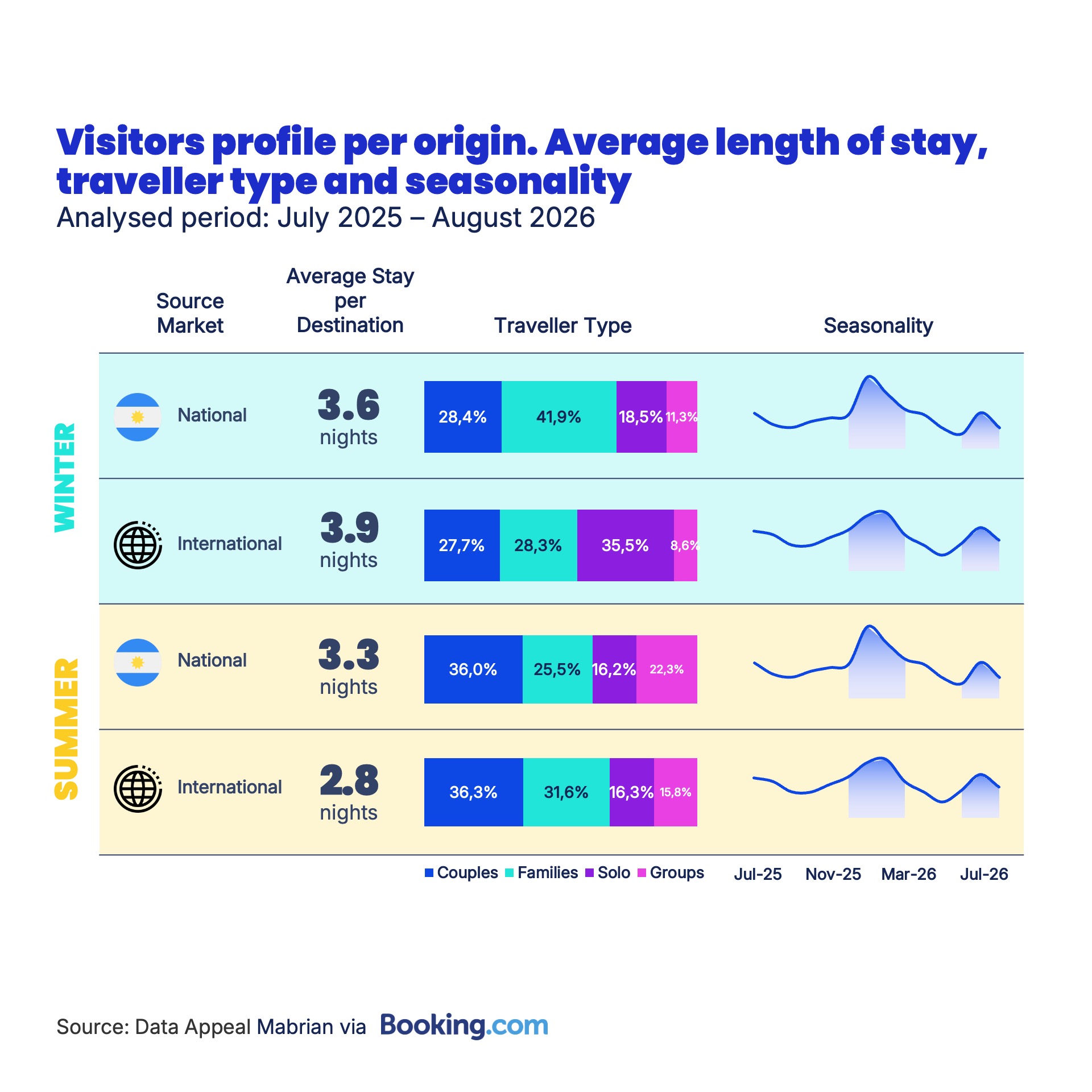
The analysis also revealed seasonal opportunities to refine promotional strategies and messaging. During the winter season, family travel and longer stays dominate demand, while the summer season sees a higher share of couples and experience-driven travellers. Accommodation preferences also vary significantly by source market, highlighting the need for tailored marketing and product development strategies for each visitor segment.