


Mabrian and Data Appeal’s analysis of the US online experiences and activities market highlights the pivotal role that cultural experiences and outdoor adventures play in shaping destination positioning and promoting multi-state travel, with the goal of extending tourism to every corner of the country.
An in-depth analysis by Mabrian and The Data Appeal Company shows that Florida, California, New York, Hawaii, and Nevada account for over half of all experiences and leisure activities marketed through major online platforms in the United States. This concentration highlights an opportunity for other states to expand their experience offerings, diversify itineraries, and attract both domestic and international travellers seeking immersive, All-American experiences across the country.
This insight is based on an analysis of the supply of activities and experiences in the United States, as well as the demand for these products, leveraging data from Civitatis and GetYourGuide, two of the leading online experiences platforms, with consolidated data from the last six months.
The analysis indicates that Florida (14.9%), California (13.1%), along with New York (12.9%), Hawaii (7.3%), and Nevada (4.5%) account for over half of all available activity offerings, reflecting their relevance as key tourism destinations that host many of the country’s most sought-after experiences and attractions. The top 10 is completed by Texas (4%), Colorado and Virginia (3.3% each), Arizona (3%), and Utah (2.9%). The remaining 30.7% of available activities are distributed across the other 40 US states.
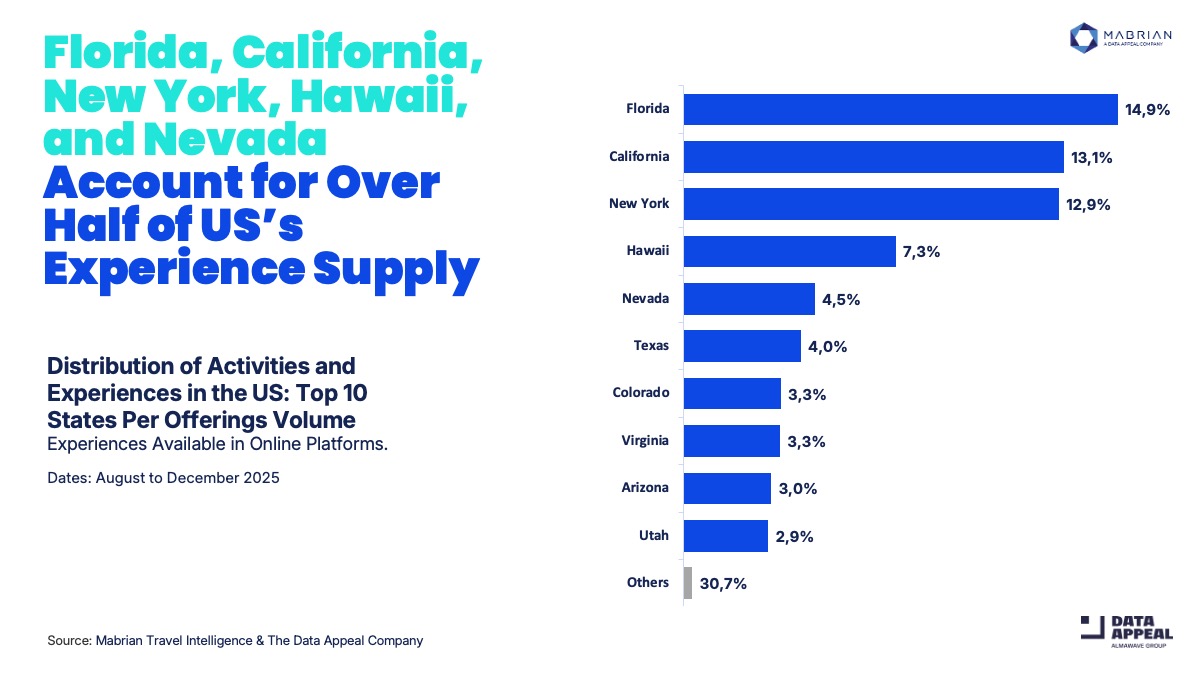
According to Maria Pradissitto, North America Market Manager at Data Appeal, these data indicate that many US states have “room to grow their activities offer in the effort to increase both domestic and international travel beyond the traditional hotspots, leveraging opportunities to appeal to multiple traveller segments by raising awareness of lesser-known locations that offer quintessentially All-American experiences.”
In fact, Mabrian and Data Appeal’s data intelligence highlights the relevance of cultural experiences in the United States, both in terms of available offerings and their ability to engage travelers with the destinations.
Cultural experiences (40.7% of available listings) and active tourism (27% of the total) continue to serve as the US’s core pillars in terms of supply, complemented by nature-based activities (15.3%), culinary (10%), and sunbathing (3.2%). While nightlife and family activities account for 1.5% and 1.1% of total listings, other categories, such as shopping and wellness, are currently less prominent and together represent less than 1% of the country’s experience offerings.
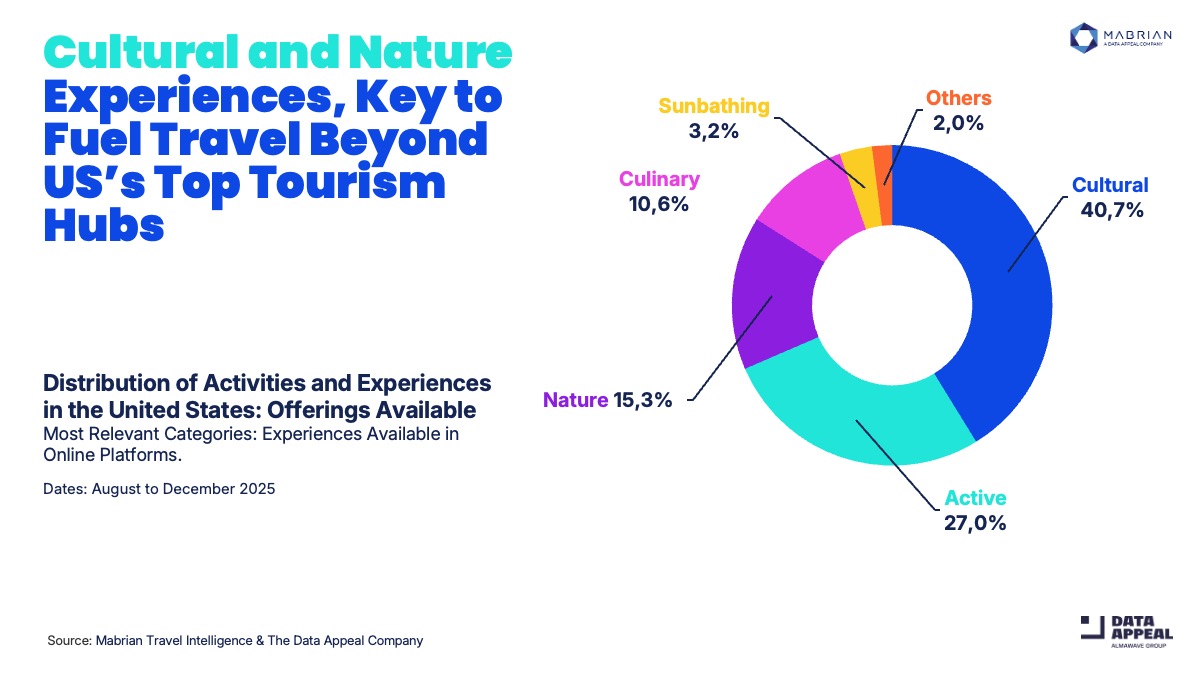
Interestingly, data on traveller interests show that cultural experiences account for 50.9% of visitors’ reviews, reflecting strong engagement with activities centred on local heritage, arts, and traditions. The balance between active tourism (20% of reviews) and nature-based activities (20.6%) demonstrates an interest in the outdoors, both with intensive or soft adventure alternatives to allow travellers to explore the US’s varied and striking natural landscapes. Family activities (1.4% of total reviews) also represent a niche opportunity to expand offerings tailored to all age groups.
“The strong engagement generated by cultural experiences is a strategy worth exploring for US destinations—not only to connect with domestic travellers but also to attract international visitors eager to enrich their stays with activities rooted in local culture and heritage,” points out the Data Appeal expert. The 250th anniversary of the United States in 2026 presents “a unique opportunity for destinations to showcase their cultural and historic assets, while promoting multi-state itineraries grounded in heritage and identity. It’s a moment to encourage travellers to go beyond iconic landmarks and connect more deeply with the stories that define the nation.”
As Pradissitto notes: “This approach opens the door to state-level segmentation, enabling the design of itineraries that combine popular hotspots with lesser-known destinations within or across states. The result is a more resilient tourism ecosystem that supports local economies, preserves community identity, and builds long-term value for American destinations.”