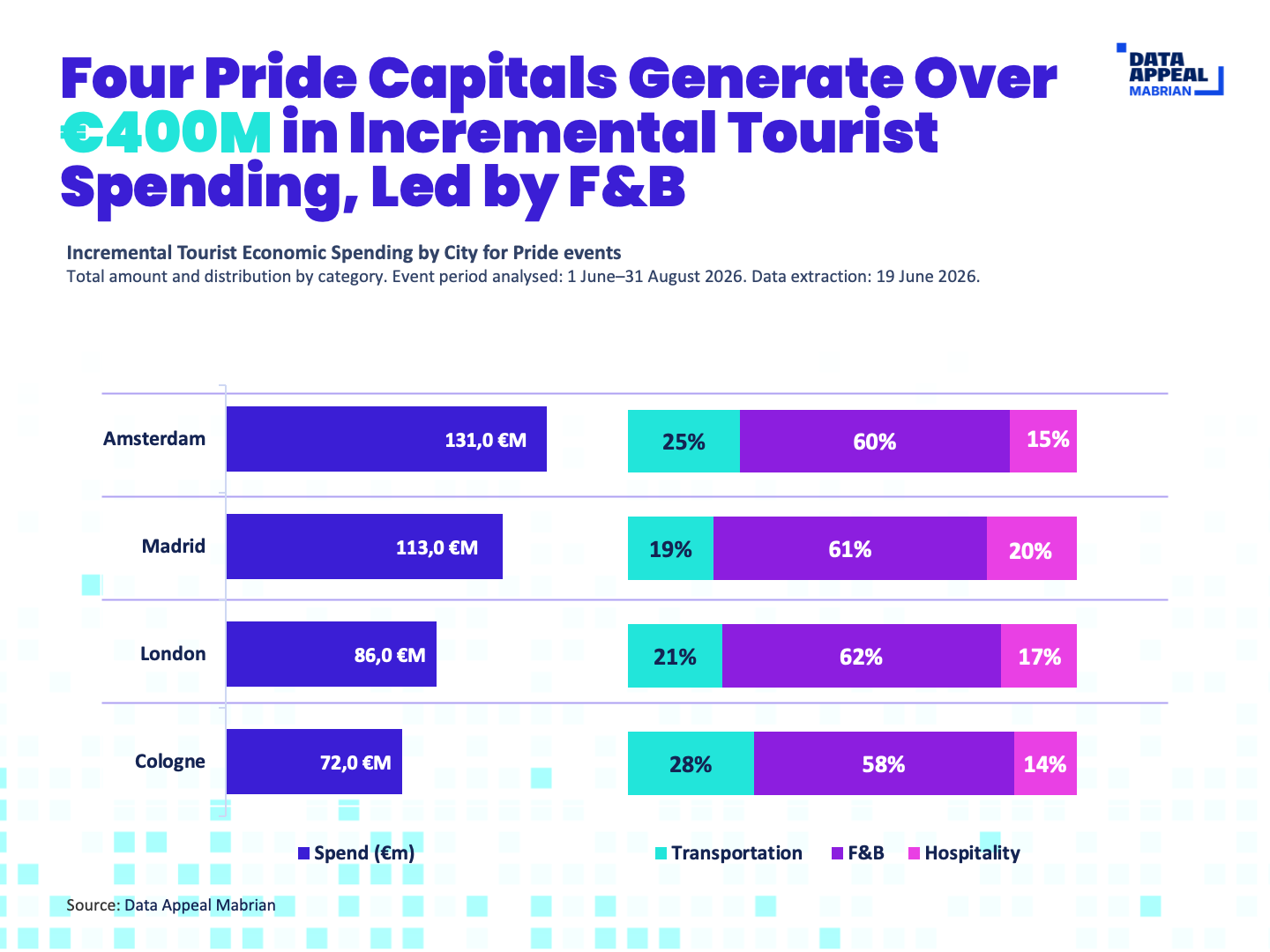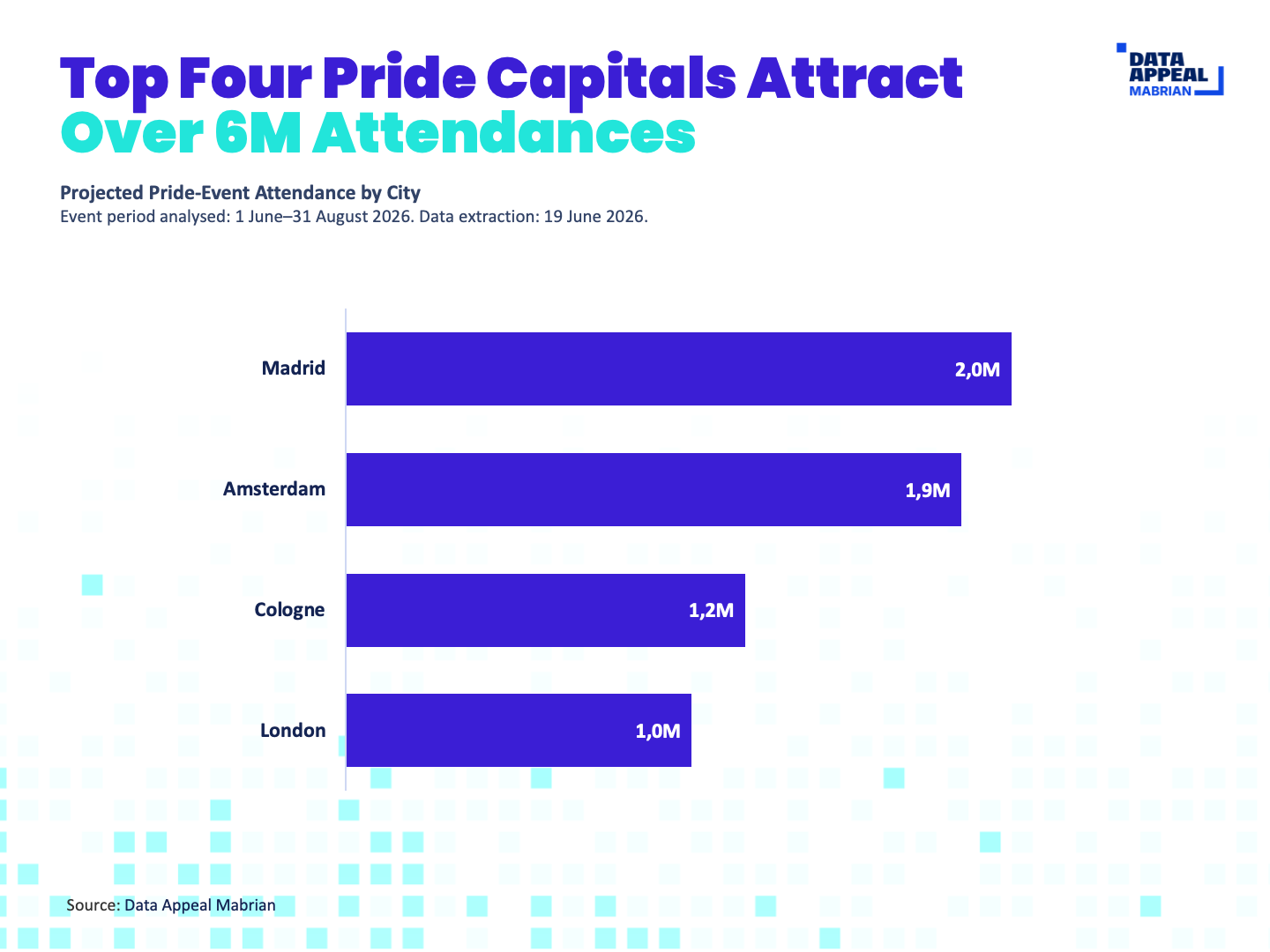

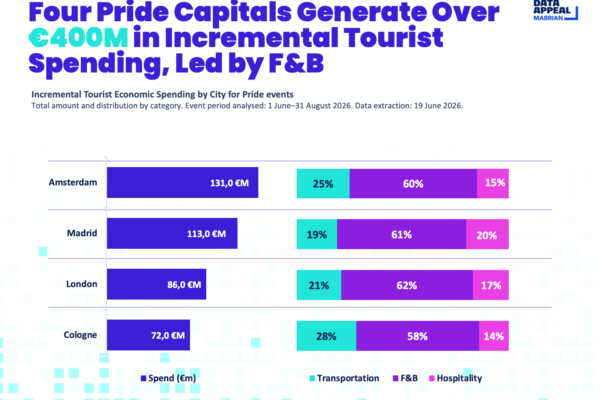
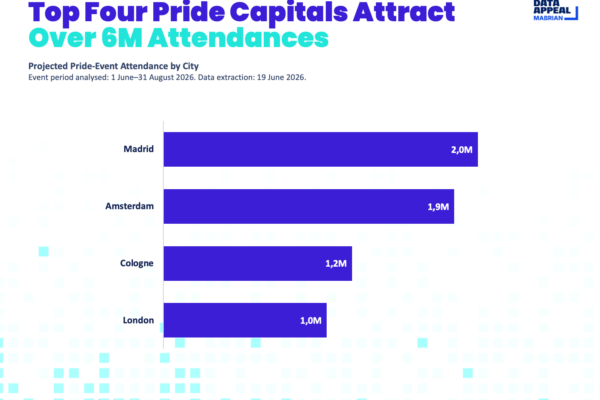
More than 6 million attendances were recorded across these four European cities, according to The Data Appeal Company. The analysis also estimates that nearly €6 of every €10 in incremental visitor spending went to food & beverage, underscoring Pride’s significant contribution to local business and economies.
FLORENCE (ITALY), Sept 14, 2026 — Nearly half of all Pride events held across key European destinations—the United Kingdom, Spain, the Netherlands, and Germany— took place in four cities: Amsterdam, Madrid, London, and Cologne. Together, they accounted for 92% of both total attendance and incremental tourism spending generated by Pride celebrations in those four countries, according to The Pride Effect: Measuring Tourism and Economic Impact Across Europe, a new report from The Data Appeal Company / Almaviva Group based on insights from Data Appeal Mabrian, its travel intelligence solution.
Developed in collaboration with Queer Destinations, following the recently established strategic partnership between the two organizations, the report examines the tourism and economic impact of Pride celebrations across Europe.
“The findings show that Pride is more than a cultural & social celebration,” says Carlos Cendra, Chief Marketing Officer at The Data Appeal Company. “When people feel welcome and valued, they are more likely to engage with the city, and this creates lasting and widely shared value, contributing to a more connected, vibrant, and resilient place for visitors, residents, businesses, and communities alike.”
This release follows Amsterdam’s hosting of EuroPride and WorldPride 2026, highlighting how flagship Pride events drive visitor demand, tourism spending, and economic benefits for urban destinations while reinforcing their reputation as inclusive and welcoming places to visit.
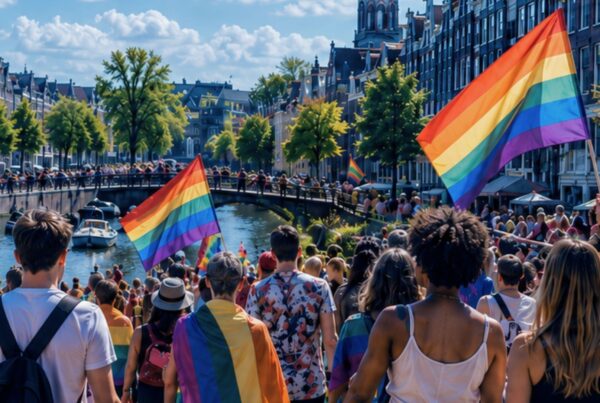
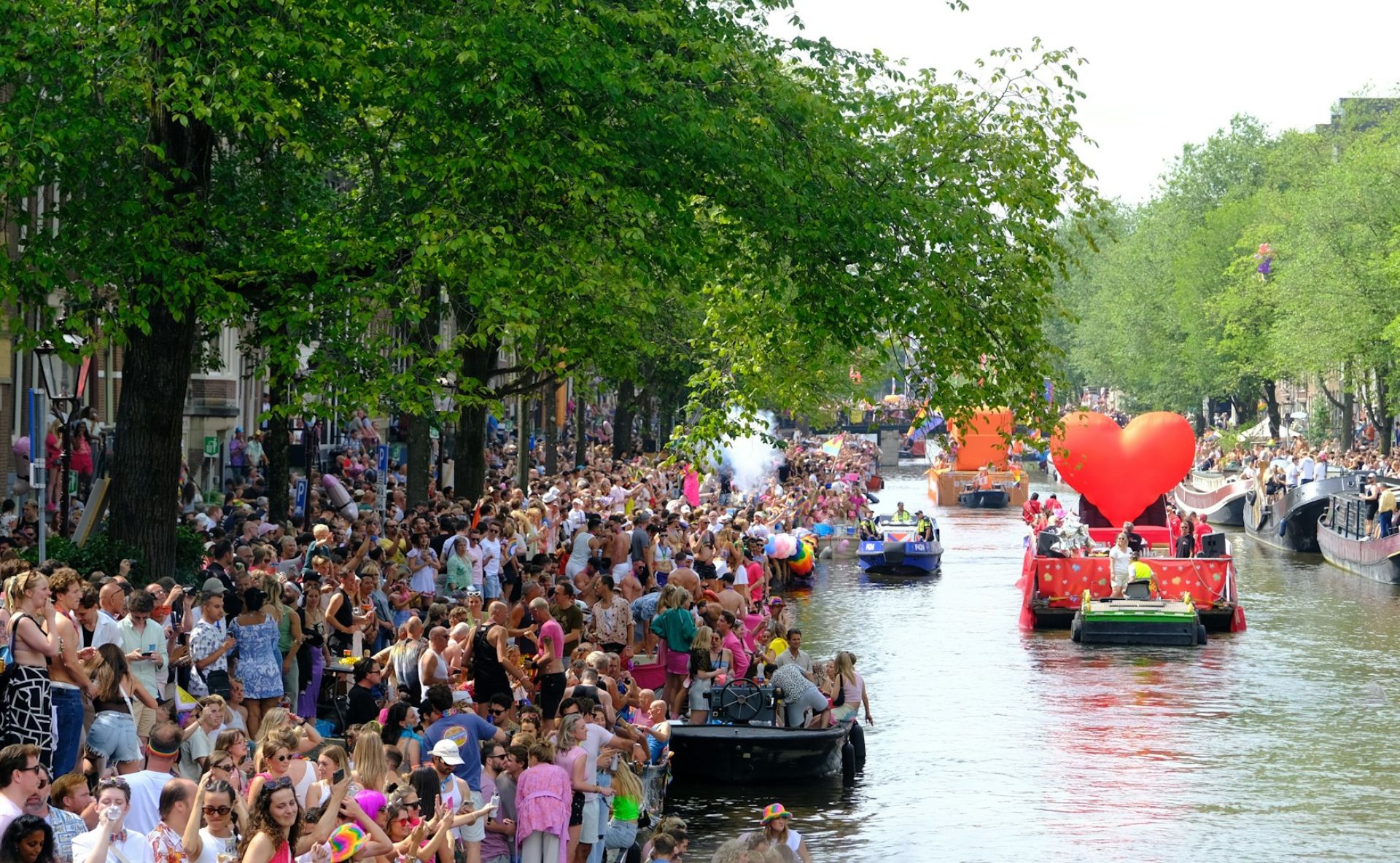
#1: Amsterdam: Festivals Generated 77% of Pride-Driven Tourist Spending. As host of WorldPride 2026, Amsterdam’s Pride programme was largely shaped by WorldPride itself. The event generated €78.5 million in incremental tourist economic spending—around 60% of the city’s total. More broadly, festivals were the engine of Amsterdam Pride, accounting for 71% of attendance and 77% of incremental tourist economic spending.
#2: Madrid: Pride Supported Travel and Longer Stays. With more than 2 million attendances, food & beverage accounted for 61% of incremental tourist economic spending during Pride celebrations, while hospitality and transportation represented 20% and 19% respectively—suggesting a mix of overnight stays and movement around the city, potentially supported by Madrid’s longer Pride period.
#3: London: Higher Cost Base, Key to Understanding Tourist Spending. London recorded over 1 million attendances. Visitors travelling specifically for Pride generated €86.2 million in incremental tourist economic spending. Food & beverage accounted for 62% of this total, partly reflecting the city’s higher cost base, followed by transportation at 21% and hospitality at 17%.
#4: Cologne: A Compact Programme Delivered Major Impact. Cologne accounted for less than 1% of the events analysed, yet recorded 1.2 million attendances. It represented 14% of incremental tourist economic spending across all Pride events analysed by Data Appeal Mabrian across the four countries. Food & beverage accounted for 58% of Cologne’s total, while transportation reached 28%—highlighting the strong turnout and travel demand created by its compact programme.
“The world has changed, and Pride events around the world are a clear example of the LGBTQ+ community’s economic, social and cultural value,” says Edgar Weggelaar, CEO, Queer Destinations. ”Yet while they generate an important income for cities and businesses, many Pride events are still organised by nonprofits working without compensation and artists donating their talent. We believe it is time to make more conscious choices as a community by supporting companies and destinations that invest directly in the most vulnerable sectors of the LGBTQ+ community and ensure that Pride organisations receive a return on the work they do.”
Download the report
Subscribe to our newsletter to receive the full report.