


Our latest insights on this destination, presented at the “Reimagine Tourism in Greece”, highlight key opportunities for Greece’s tourism industry to gain a competitive advantage, including enhancing long-haul connectivity and deepening in diversify traveller motivations to combat seasonality, a critical issue that involves by dealing with carrying capacity effects and fostering extended overnight stays.
Enhance long-haul connectivity and deepen motivational diversification are two key opportunities Greece can leverage to gain competitive advantage respect to other Mediterranean destinations. This is the key insight shared during the keynote presented in “Reimagine Tourism in Greece”, a high-level event held in Athens (Greece) this week, organized by Kathimerini and the Greek Tourism Confederation (SETE).
Kyriakos Mitsotakis, Prime Minister of Greece, and Tshering Tobgay, Prime Minister of Bhutan, are among the speakers that attended this conference, that also gathered key opinion leaders from Greek travel industry, to discuss innovative approaches that help redefining the future of tourism in Greece. Mabrian’s Sales Director, Catalina Taltavull, shared the travel intelligence analysis, that dived deep in Greece’s positioning as Mediterranean destination, comparing challenges and opportunities ahead for the country.
Mabrian’s “Greece Outlook” report broadens the analysis performed in the study on emerging destinations in Greece (released in early September 2024), by considering the performance of specific competitors (Spain, Italy, Croatia, and Turkey) throughout 2024, and how Greek destinations can harness travellers’ trends currently reflecting in choices to Mediterranean destinations.
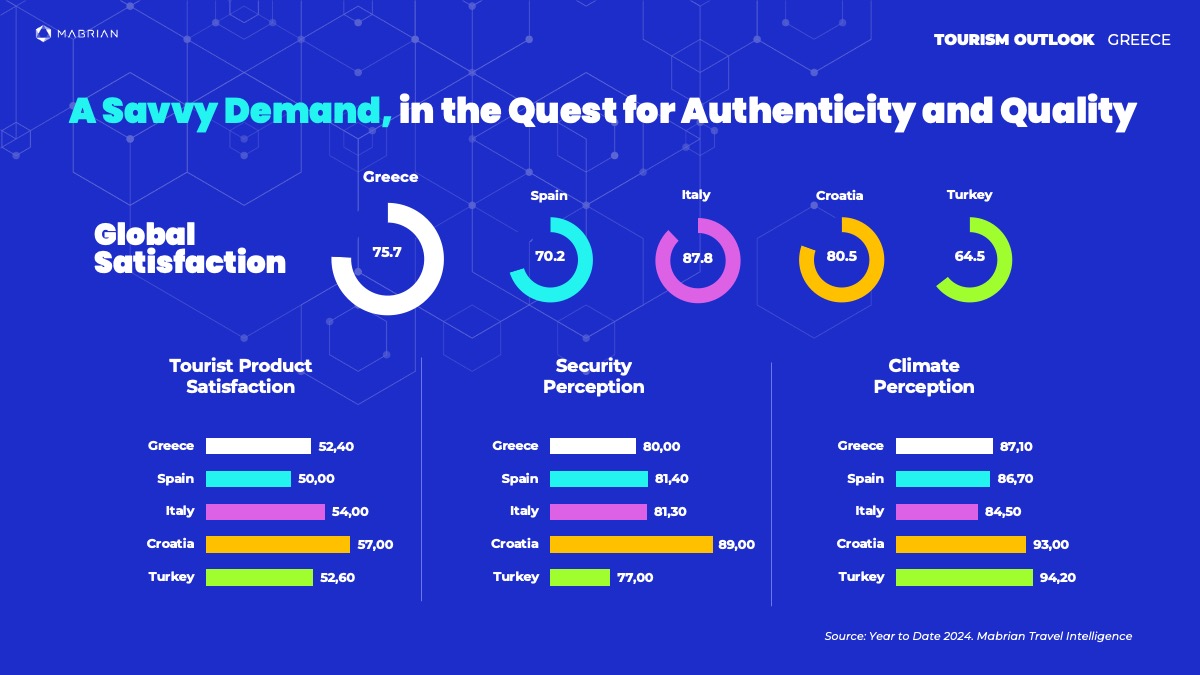
High-quality, authentic experiences are becoming increasingly important to travellers when selecting a destination, and competition in delivering these experiences is intense in the Mediterranean. Refining tourism products and services, while maintaining quality and authenticity as core principles, is crucial for Greece, to maintain and improve its Mediterranean positioning, already showing good signs with the positive performance of its Global Tourist Perception, as well as climate and security travellers’ perception.
A Long-Term View on Seasonality Management
Mabrian’s data insight unveils the similarities of the structure of the air connectivity networks of Greece and its competitors, mainly, a significant reliance in European key outbound markets, and diverse strategies to push for year-long visits that harness Mediterranean good weather conditions.
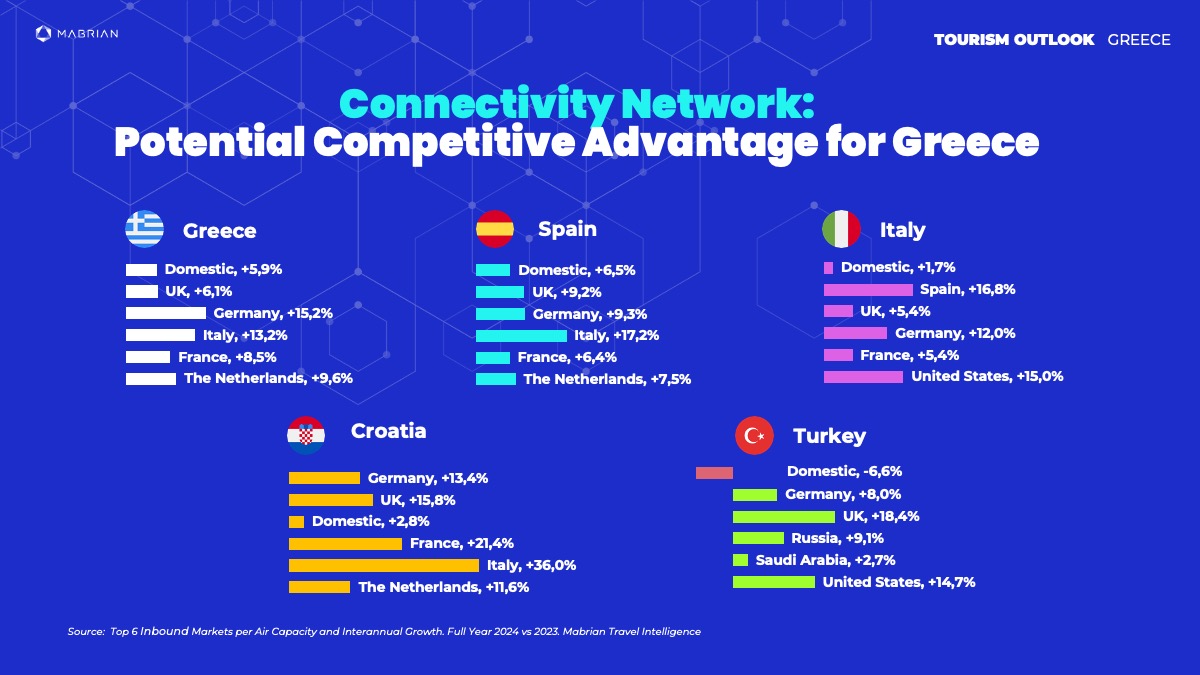
“As happens with Greece and the competitive set analysed, summer is naturally a highly seasonal period, so opportunities lie in alternative inbound markets, with a different set of motivations and drivers, and less dependent on summer demand”, explains Mabrian’s Sales Director.
United States inbound market is very promising for Greece as, even though it is still not among the top 10 inbound markets per air capacity, direct connectivity is growing +23% compared to 2023. “Other source markets with great potential for non-seasonal demand are Asia and Middle East, also resonating with Greece’s motivational diversification strategy, reflected in our data”, Taltavull indicates.
Increasing arrivals from alternative, long-haul markets, and committing to motivational diversification can contribute to deal more effectively with seasonality and plays a relevant role helping hotel industry to leverage price elasticity in higher categories off-season; as per Mabrian’s travel intelligence.
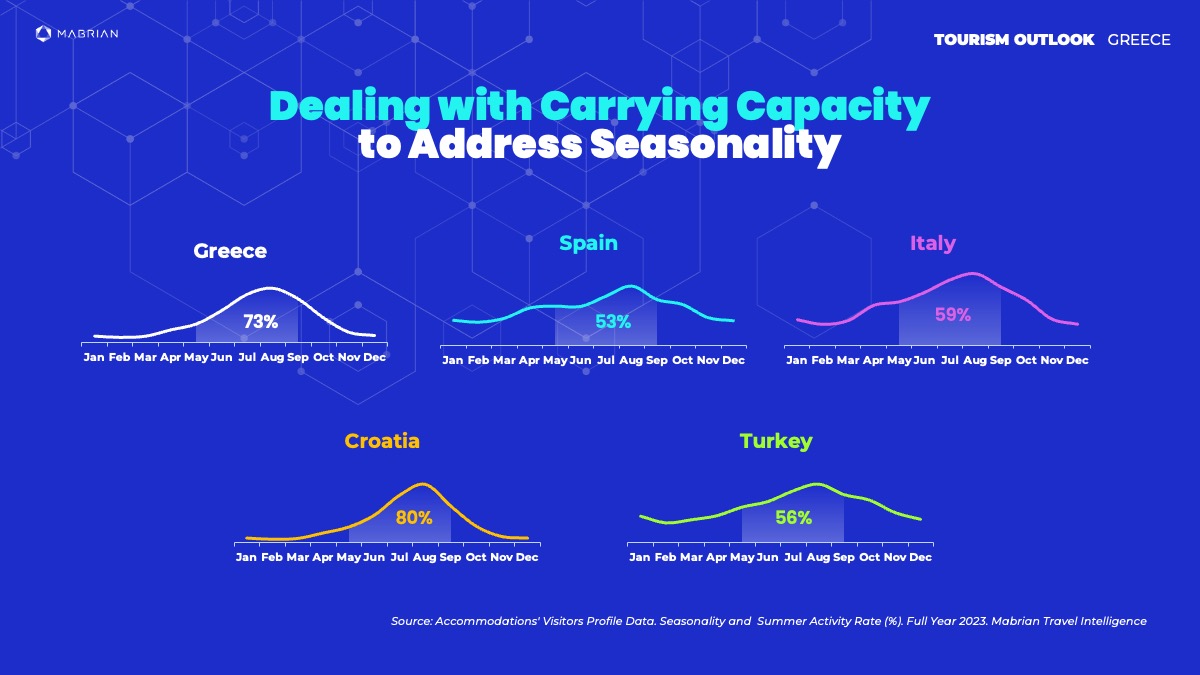
The report presented also stresses the importance of managing visitors’ perceptions and experience distinguishing carrying capacity and overnight stays, to balance the effects of seasonal tourism pressure, in particular among travellers’ satisfaction. As Mabrian Sales Director points out “a strategy centered on increasing overnight stays among one-day visitors can have a positive impact on Greek destinations, as it can contribute to balance and distribute arrivals, enhance economic impact, improve destinations’ perception, and boost locals’ welfare and overall travellers’ experience in destination”.
With gross bookings projected to reach $201.6 billion in 2024 alone, short-term rentals (STRs) play a significant role in the accommodation mix of any destination, according to a new collaborative white paper by our team, in partnership with and partly based on Phocuswright research, with The Data Appeal Company – Almawave Group. Demand for and supply of STRs have evolved, and understanding these dynamics is essential to balancing the needs of travellers with the well-being of local residents — particularly in Europe, where major cities and destinations are re-evaluating regulations and limits to address the unintended consequences of STRs’ rapid growth.
Despite ongoing debates surrounding housing, regulation, and market saturation, Europe’s short-term rental (STR) market is not only thriving—it is maturing, evolving, and challenging long-held stereotypes. Understanding these shifting dynamics is essential for effective policymaking, as well as destination planning and management. This is the key takeaway from a new white paper developed by our team, in partnership with and partly based on Phocuswright research, and The Data Appeal Company – Almawave Group, ahead of Phocuswright Europe 2025, taking place from 10 to 12 June in Barcelona.
The study, “Short-Term Rentals Market in Europe: Understanding the STR Traveller”, aims to stimulate discussion around the impact of STRs on destinations. It profiles STR travellers across six leading European cities—Mallorca, Dubrovnik, Prague, Lisbon, Paris, and Rome—while identifying key trends and uncovering opportunities for destinations, hosts, and policymakers to recalibrate their strategies.
The data shows that the STR segment is much more than a budget-friendly hotel alternative. In fact, the report reveals a vibrant and diverse guest demographic, comprising high-income professionals, “silver” travellers aged 55 and over, long-stay guests, and multigenerational families. For many of these groups, STRs are the preferred form of accommodation when visiting their holiday destinations.
Myths and Opportunities on STR market—and the Data Behind Them
Focusing on the three key source markets for the six European destinations analysed, the report reveals five valuable insights to help destinations better manage and respond to the diverse and growing STR market.
The Income Myth: STRs Are Not Just for Budget Travellers
In cities such as Rome, Dubrovnik, and Paris, over 65% of U.S. STR guests fall into high or very high-income brackets. Mabrian data shows a significant presence of affluent travellers, who together represent between 50% and 70% of the market share across the most relevant source markets for these cities.
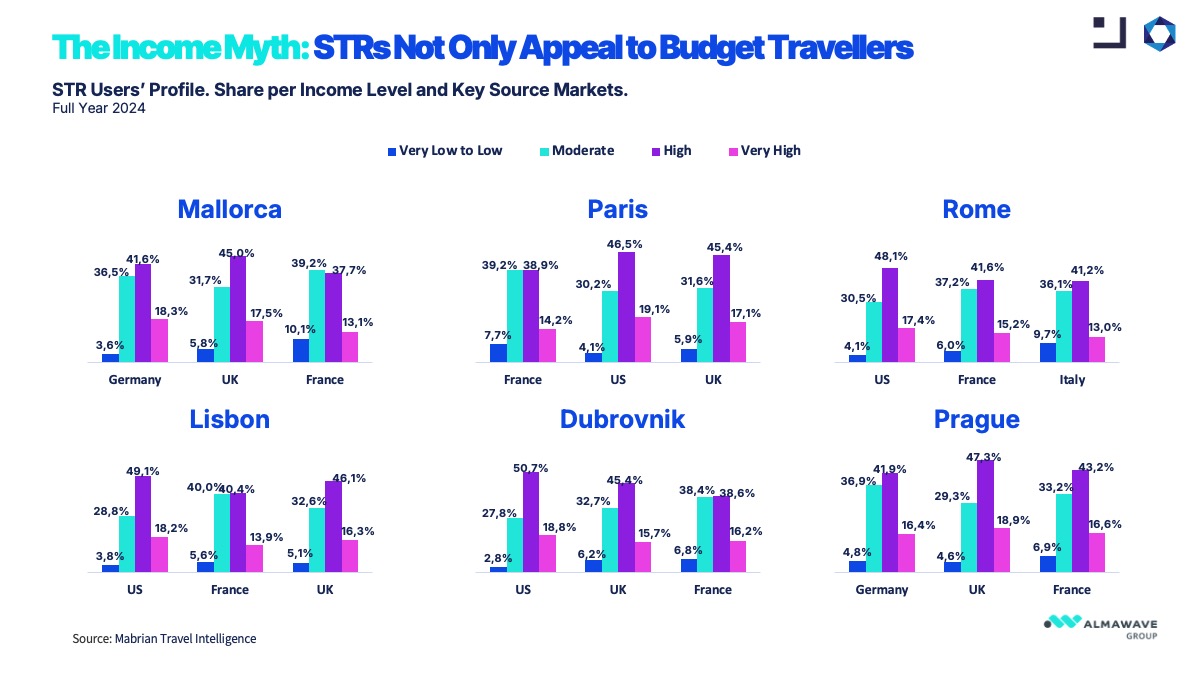
Even among French and British travellers, middle- and high-income earners constitute the majority of STR demand. Many of these travellers opt for STRs due to the space, flexibility, and location they offer, rather than for lower prices—positioning STRs as a lifestyle-driven choice rather than merely a budget-friendly alternative to hotels.
The Age Opportunity: “Silver” Travellers Represent a Growing Niche
Mabrian data indicates that in several source markets, travellers aged 55 and over account for between 5.5% and nearly 10% of STR demand, particularly among American and French visitors.
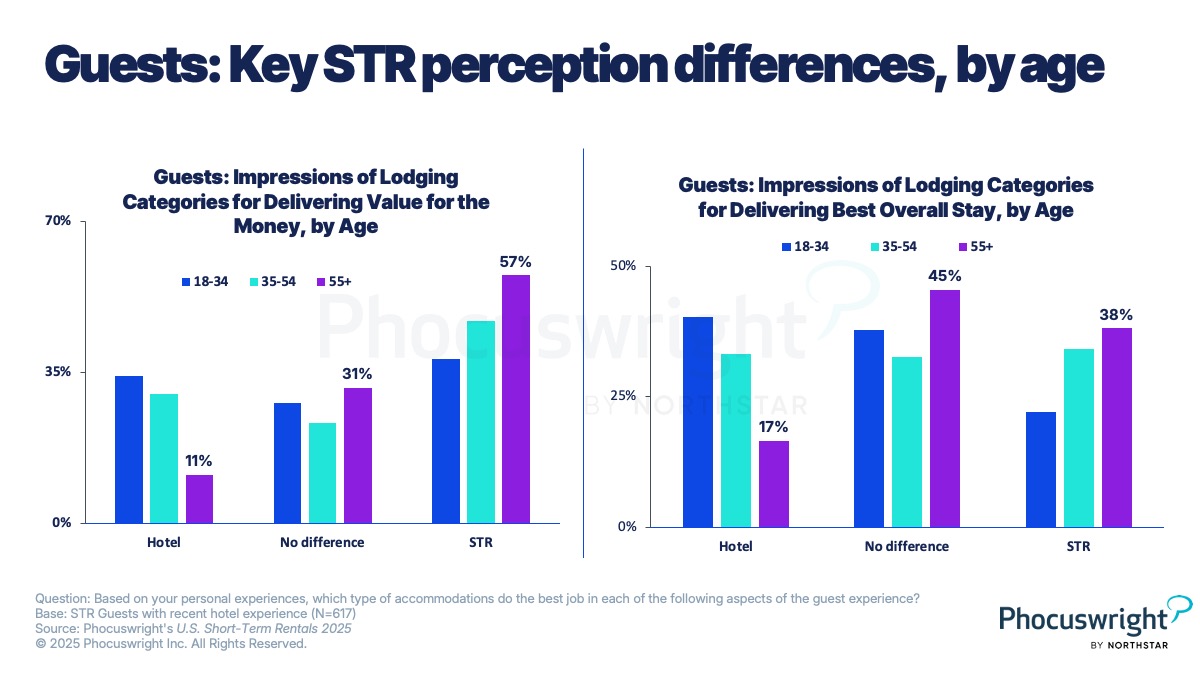
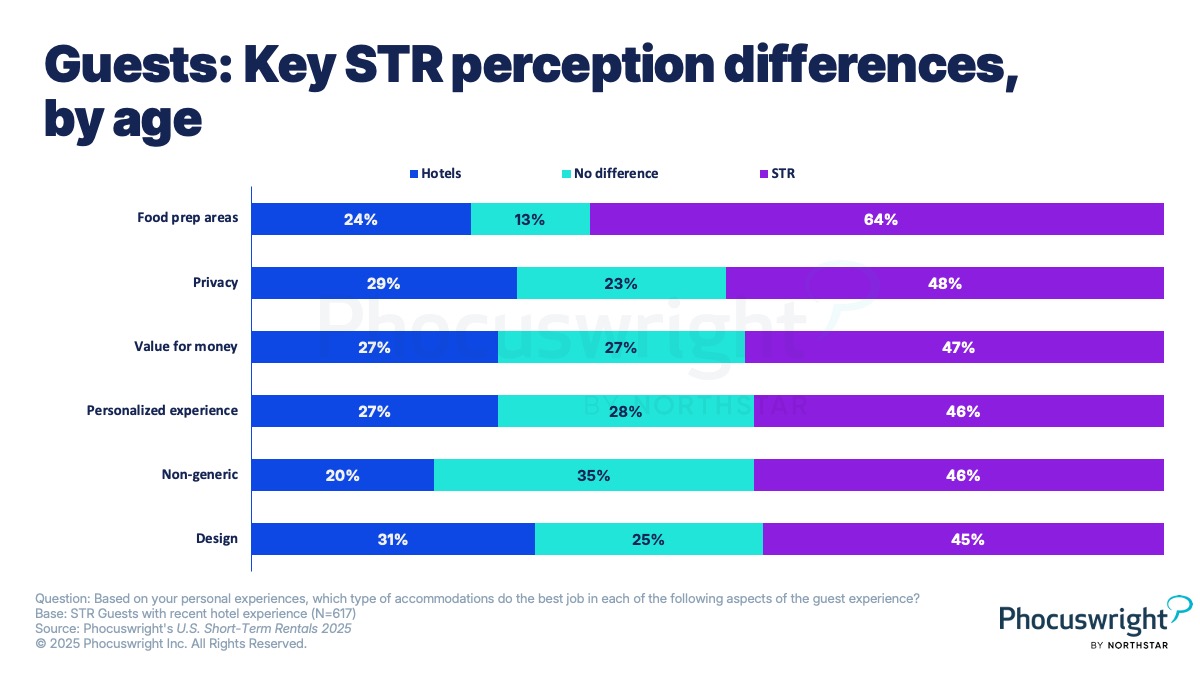
This “silver” segment holds untapped potential, particularly for promoting off-peak, year-round tourism. These travellers tend to value privacy, kitchen facilities, and quieter neighbourhoods—features that STRs are uniquely well-suited to provide. According to Phocuswright data, value for money is one of STRs’ strongest attributes, especially among guests aged 55+, with 57% of them perceiving STRs as offering superior value compared to other accommodation types.
The Capacity Opportunity: A Different STR for Every Travel Experience
The unique characteristics of each destination strongly influence the types of STRs in demand, reflecting the broader role of tourist rentals within the local accommodation mix.
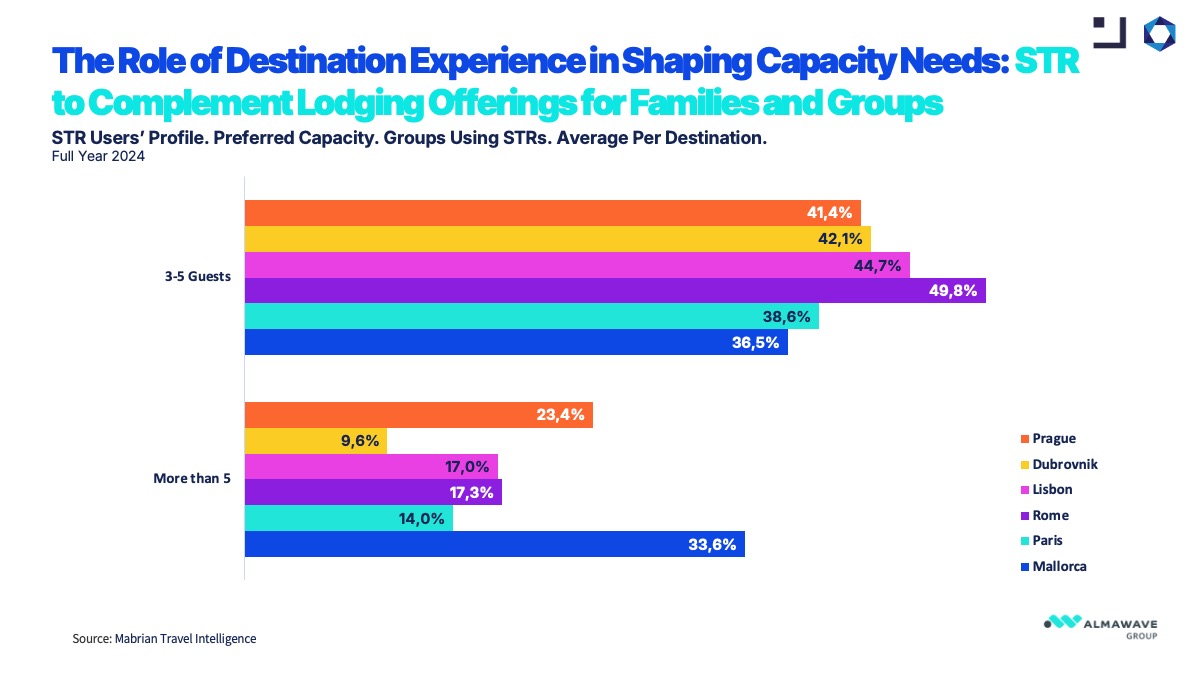
In cities such as Paris and Dubrovnik, STRs primarily complement hotel double rooms, with over 48% of STR users in Dubrovnik and more than 44% in Paris favouring properties suited to couples. Conversely, in leisure-driven destinations like Mallorca and Lisbon, or culturally rich urban centres such as Rome and Prague, there is greater demand for larger properties tailored to families or groups.
The Convenience Myth: The “Full Property Effect”
Across all destinations analysed, at least 80% of travellers opt for entire-property rentals, according to Mabrian data. Among Americans, this preference is even more pronounced, with nearly 90% choosing full-unit STRs in some locations. This “Full Property Effect” underscores the strong appeal of STRs among families, groups, and remote workers.
The Seasonality Myth: STRs Support Tourism Year-Round
Mabrian’s seasonal data demonstrates that STRs help extend tourism beyond traditional peak periods. During shoulder seasons, they support longer stays and attract travellers seeking better rates and more authentic local experiences—making them a key component of sustainable destination management.
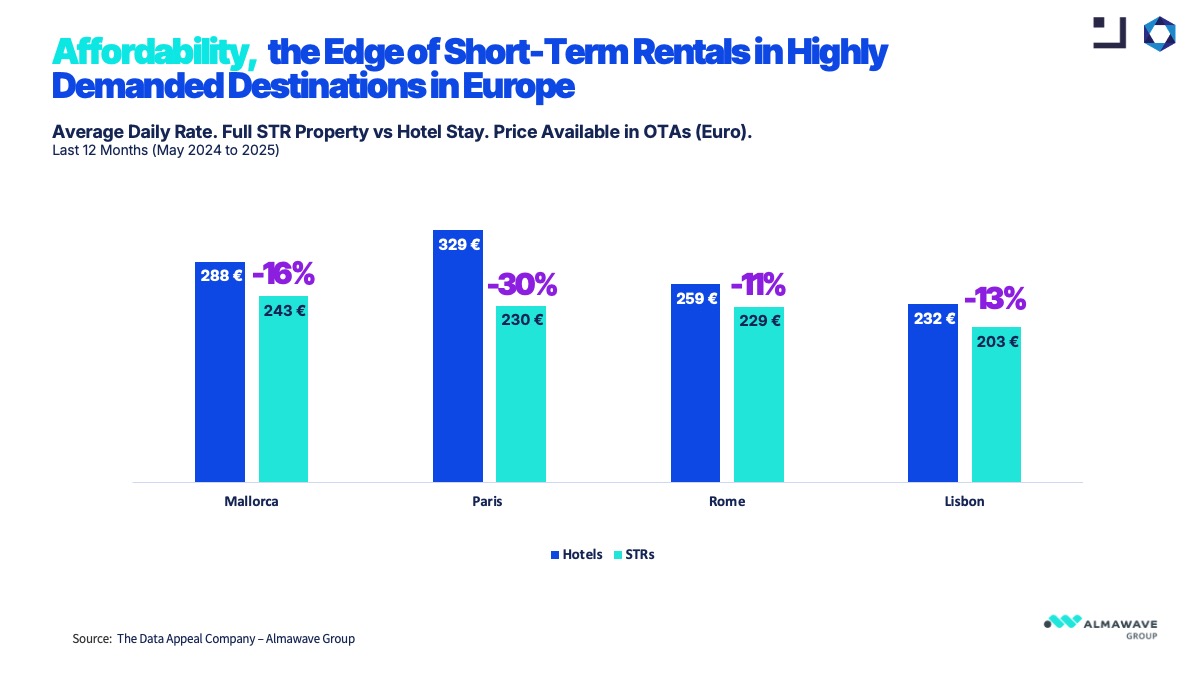
In peak periods, STRs also play a crucial role in relieving pressure on hotel capacity by offering additional lodging options. Data from The Data Appeal Company – Almawave Group reveals that average hotel room prices are at least 15% higher than STR rates across Paris, Rome, Lisbon, and Mallorca. When factoring in capacity and group needs, STRs offer a more cost-effective solution, particularly attractive during high-demand months when accommodation prices surge.
A Call for Smarter Regulation and Market Integration
The white paper also highlights the structure of short-term rental (STR) lessors and its impact on the economies of destinations, as well as the diversification and consistency of accommodation offerings, citing the Spanish case study. “The short-term rental market in Spain is predominantly in the hands of individuals (74.1% of properties) and small-scale owners or managers (23.9%), who together account for 98% of hosts — a highly atomised landscape that presents a clear challenge for destinations,” as noted by Carlos Cendra, Partner and Director of Marketing and Communications at Mabrian. “That is why we are also examining the extent to which this model is mirrored in other European destinations, and its impact on their overall value proposition.”
While the benefits of STRs are evident, the report also underscores ongoing challenges. Fragmented enforcement, inconsistent quality standards, and the existence of shadow markets continue to undermine both guest trust and public confidence.
“Short-term rentals are not merely an alternative form of accommodation—they are a central pillar of the tourism value proposition in any destination,” says Cendra. However, he adds, “striking a balance between the STR market’s role as a local economic driver—often supported by local ownership—and residents’ concerns over quality of life is more complex than it may initially appear.”
As Mike Coletta, Senior Manager of Research and Innovation at Phocuswright, notes, “the sector is at a crossroads. Regulation must evolve to ensure that STRs enhance—not erode—the value of destinations.”
The white paper is a joint research effort by Mabrian, Phocuswright, and The Data Appeal Company. It analyses guest profiles in Mallorca, Dubrovnik, Prague, Lisbon, Paris, and Rome using data from 2024, offering granular insights into income levels, travel patterns, preferences, and sentiment.
Download report
Stay up-to-date with the latest news tailored to your industry!
Subscribe to our newsletter to receive the report.