

Qatar Tourism
Qatar
April 2022
Identifying Pain Points & Value Creators for Qatar’s Travel & Tourism with Data-Driven Key Actionable Insights
Context
In 2022, Qatar was the centre of many conversations around the world, and all eyes were gazing at the country. The FIFA World Cup Qatar 2022 was the pinnacle and, at the same time, a step in an ambitious 10-year development strategy, aligned with Qatar National Vision 2030, aimed at growing its non-energy economy by becoming a regional business and tourism hub by focusing on multiple sectors such as sports, infrastructure, healthcare, culture, and environment.
The legacy of this long-term vision are many, ranging from infrastructure designed to strengthen transport connectivity and grow the local business environment, state-of-the-art hospitality and accommodation facilities, world-class tourist attractions, to an unprecedented media exposure that reshaped Qatar’s destination identity and value proposition. Ultimately, Qatar experienced a significant uptick in its allure and inbound tourism, positioning the country on track to attract 5.6 million visitors by 2030.
To achieve such complex goals, from 2020 to 2022, Qatar relied on a data-driven approach, powered by Mabrian, leveraging travel intelligence to make strategic decisions, including policy making, investments, international campaigns, and so forth.
Key goals
In this particular project, Qatar aimed at understanding the drivers that build travellers’ satisfaction in a given destination, by diving deep in Qatar’s value proposition and travellers’ perception, to then benchmark its overall performance with key competitors’. This will provide an overview of what is behind visitors’ satisfaction or discontent with the destination’s value proposition. Understanding its competitive set dynamics was crucial to Qatar, in order to appeal to key travellers’ segments and be ready to compete in the best conditions, surfacing challenges and opportunities for its travel & tourism strategy.
Approach
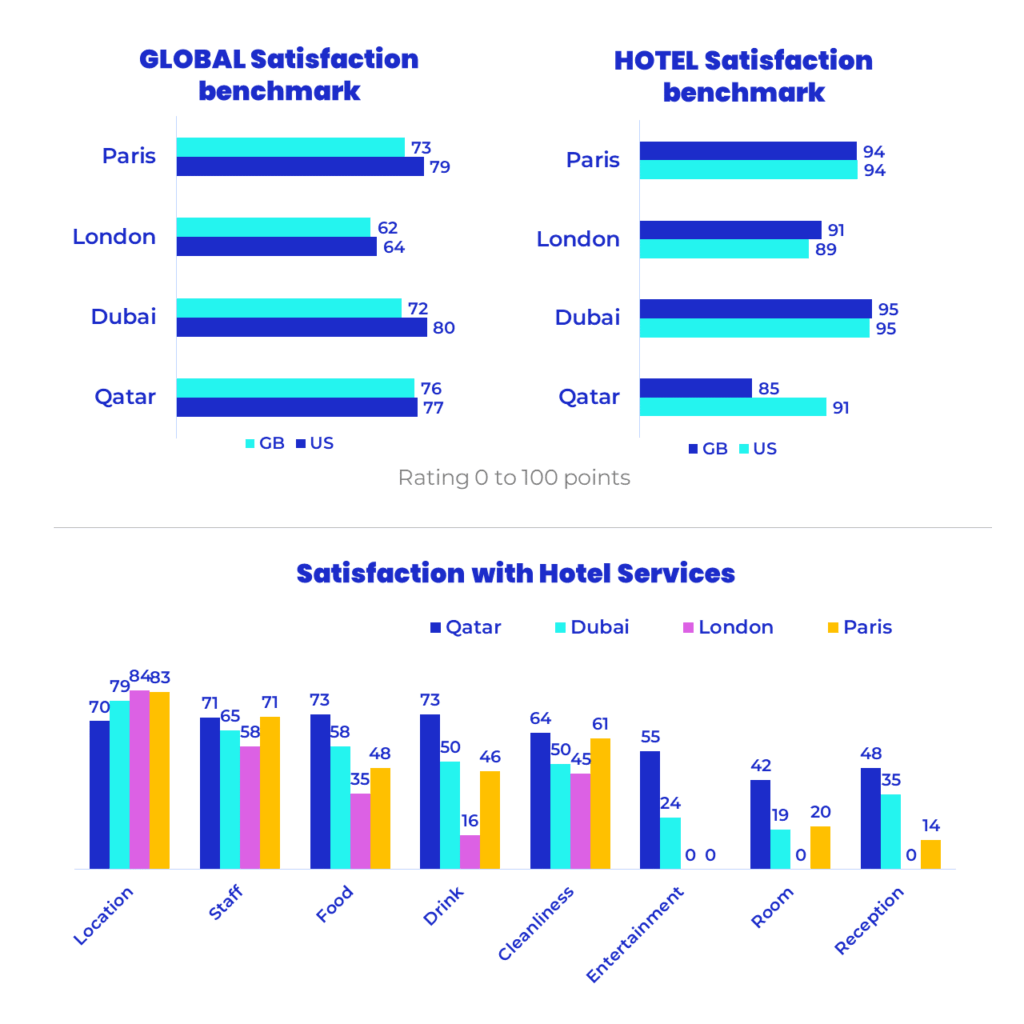
For this project, and based on Qatar administration guidelines, Mabrian cross-analysed the performance of several proprietary behavioural indicators from two outbound markets (United States and United Kingdom), to compare Qatar with other destinations in their competitive set: London, Paris, and Dubai. The study included Global Tourist Perception Index (GTPI, measuring global satisfaction with the experience in destination), Tourist Product Satisfaction Index (TPI, assessing the satisfaction with tourist products and services in destination), Hotel Satisfaction Index (HSI, to understand the level of satisfaction with available accommodations), as well as Perception of Security (PSI) and Perception of Climate (PCI) indexes.
Mabrian consultants and experts provided key actionable insights to consolidate, improve, reorient Qatar’s strategy, unveiling challenges and opportunities to be addressed in all areas, including quality of tourist products and services, guest experience and local accommodation, travellers’ perceptions, among others.
Results
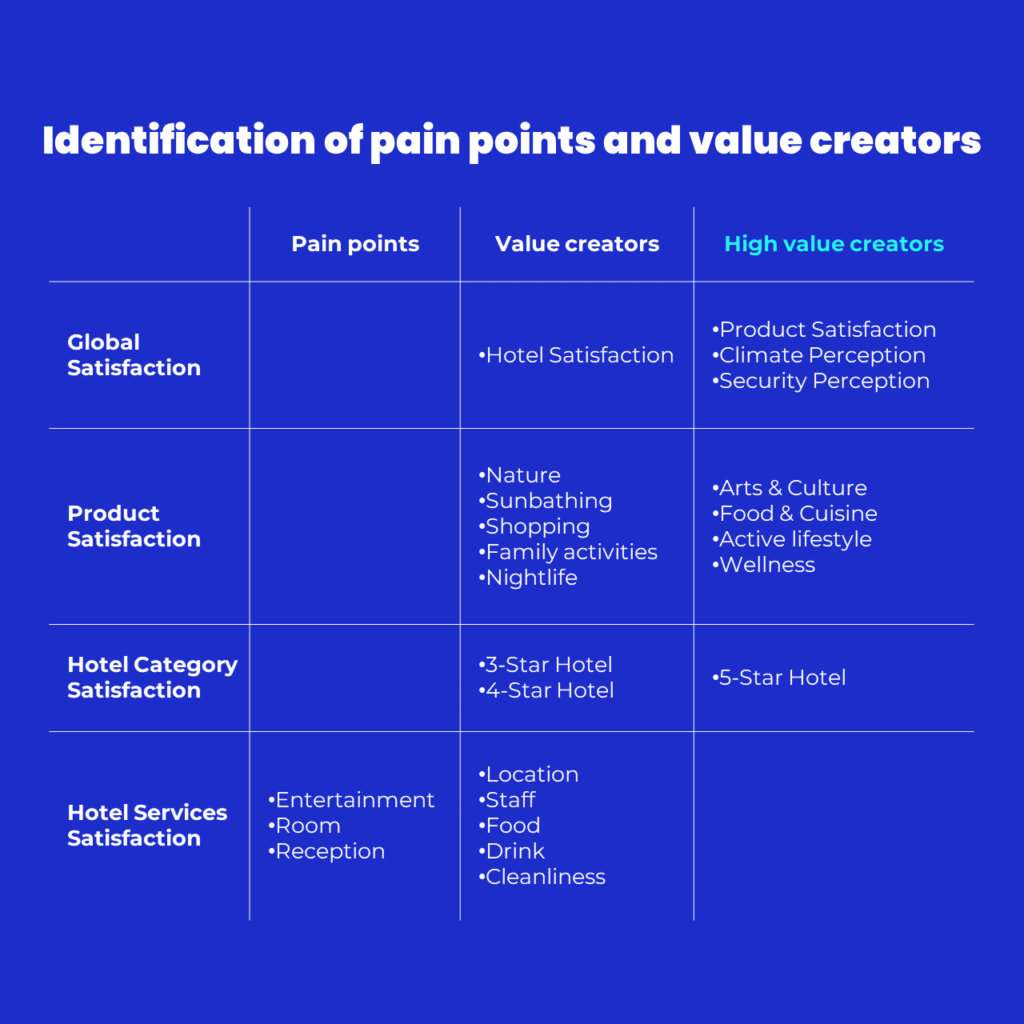
Mabrian proprietary indicators outlined a precise overview of Qatar’s competitive advantages, such as a positive overall tourist experience, positive safety and balanced climate perception, and a varied and appealing set of tourist products and attractions.
It also provided precise traceability on tourism policymaking, and unveiled hurdles that the destination overcame to achieve excellence, such as the need to refine and enhance arts & culture or active lifestyle attractions. A good example of applied use of data insights was the program designed to tackle low hotel satisfaction levels in mid-range categories with specific services. Among other measures, Qatar’s tourism administration launched a label aimed at distinguishing hotels committed to meet specific quality-level criteria and complying to defined cleanliness standards, resulting in improved guests’ satisfaction in little over a year.