

Georgian National Tourism Administration
Georgia
2021-2023
How to leverage the air connectivity landscape to unveil potential new partners and grew inbound travel for key segments
Context
Back in 2019, Georgia was a very seasonal destination for international travel, as a high percentage of the travel & tourism activity was concentrated in four months, during the summer season that had endless potential for fall and winter holiday, yet to be exploited, especially appealing to Middle East travellers, whose motivations circle around nature, culture and active tourism, travel off-season and have a high purchase power.
Prior to the pandemic, Georgia received over 156,000 travellers from the Middle East. After a record year in 2022, surpassing 200,000 visitors from this region, Georgia aimed at normalizing a sustained source of travellers from this market, leveraging the awareness built around the destination, specially in GCC countries. In order to refine and enhance Georgia’s value proposition for these source markets, developing an efficient air connectivity network was a priority, but decisions at that point should be made based on actual data. Ultimately, the GNTA aimed at maximizing their investment, making the right choices to consolidate more high-end travellers’ arrivals throughout the year, avoiding excessive seasonality and ensuring a continuous stream of spending from visitors, keeping in mind sustainability as a guiding principle for decision-making.
Key goals
GNTA had to make key decisions related to its air connectivity development strategy: choosing the most promising source markets, in terms of arrivals, spending and overall demand; selecting the most adequate airline partner avoiding inefficiencies and ensuring profitability; and deciding a the optimal date to launch the new frequency, which implies campaign and sales planning and promotion.
Approach
Mabrian’s travel intelligence provided insight that empowered the destination to understand the context of demand in key source markets, enabling them to negotiate with potential airline partners. Analysing airlines’ flight schedule and geographic distribution, flight searches and prices, seasonality and demand trends in key markets, unveiled opportunities to be harnessed, with a long-term and sustainable perspective.
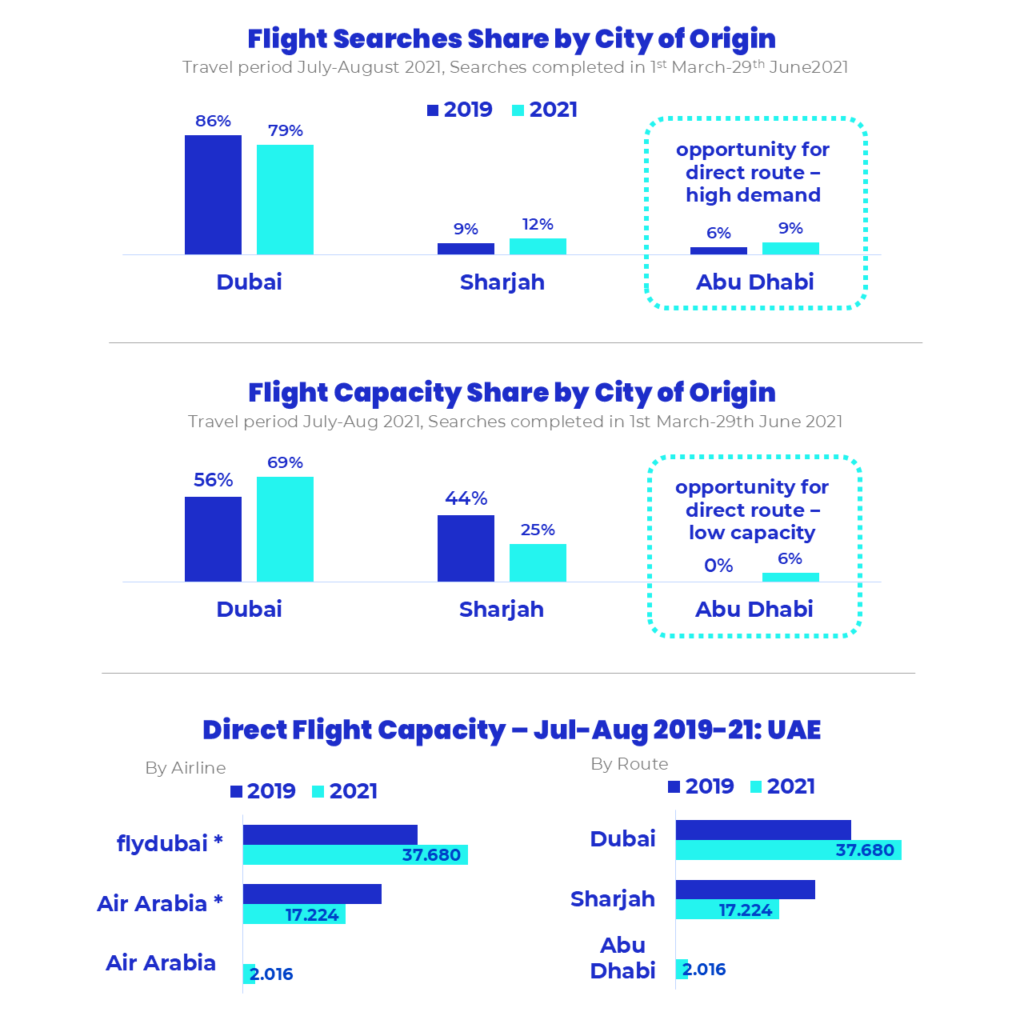
The goal was to understand where the gap was, in terms of demand and direct connectivity supply, as well as from a tourism spending and arrivals perspective.
The analysis showed that Abu Dhabi could become a strong inbound market, with a steady demand that needed to be served with other airline partners to boost arrivals to Georgia. On the other hand, Flydubai, one of the top 10 airline partners, was favouring Georgia when building its network in South Caucasus, when compared to Georgia’s key competitors.
Results
Thanks to this insight, Georgian National Tourism Administration successfully launched the new route, pushing for product development in the destination, to cater this non-seasonal surge of travellers.
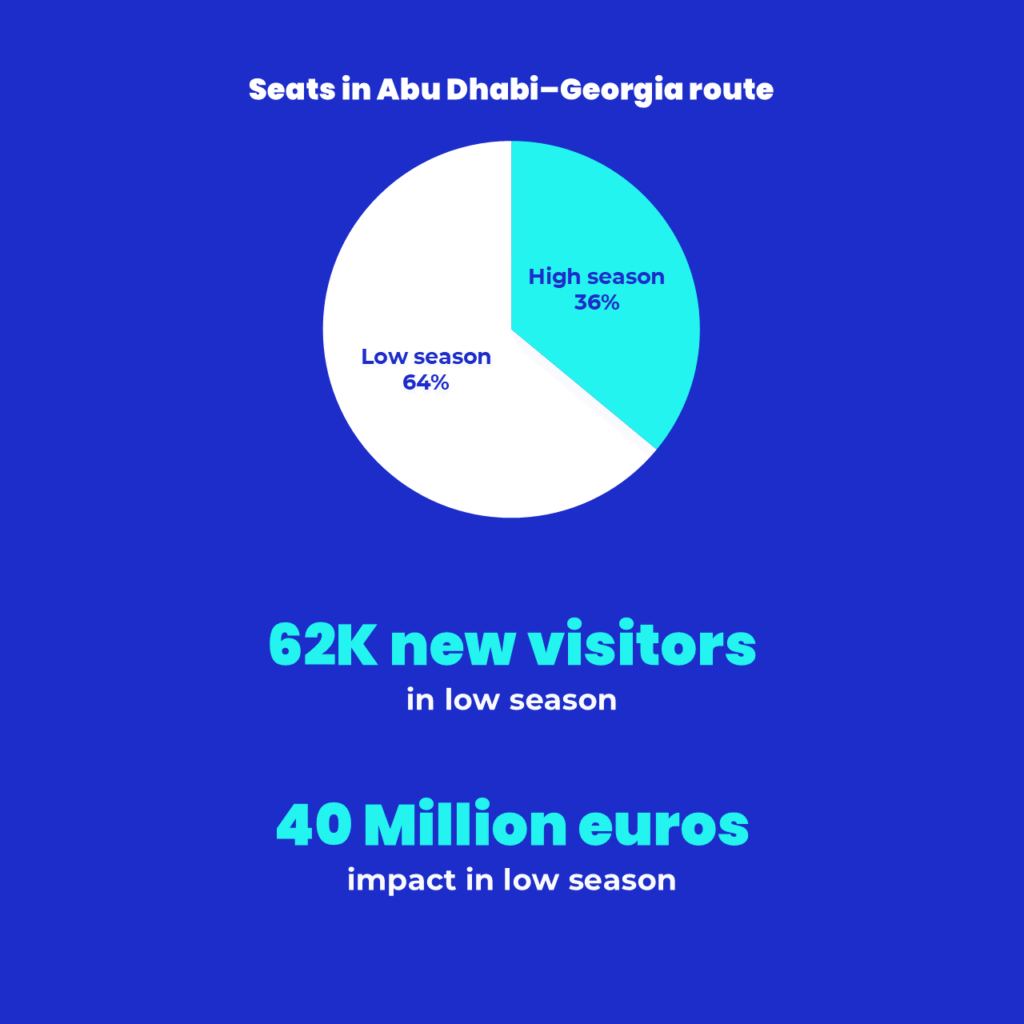
Connectivity from Abu Dhabi to Georgia (including the two airports in the capital, Kutaisi and Tiblisi) grew 2,000% 24 months after the new flight started operations. from 5.7K seats in 2021 to 121K in 2023, 64% of them arriving during low season. This resulted in more than 62.000 new visitors off season and an estimated economic impact of around 62 million dollars.