

Within the “Playas sin límites” project, promoted by five Spanish destinations—Almería, Costa del Sol, Lanzarote, Pontevedra, and Santander—Mabrian presented key takeaways from a data-driven analysis to contribute to the primary objective of this initiative: to maintain activity on the Spanish coast beyond the high season.
Almería, Costa del Sol, Lanzarote, Pontevedra, and Santander, five Spanish destinations representing the diversity of the Spanish coastal offering, have concluded the “Playas sin límites” project, which is part of the Experiencias Turismo España program of the Secretary of State for Tourism.
The closing ceremony, presided over by Ana Muñoz, Director General of Tourism Policies at the Ministry of Industry and Tourism, included the presentation of awards for university final degree/master’s projects that address proposals aligned with the sustainability and beating seasonality objectives of the Spanish coast destinations. The global conclusions of a study prepared by our team of analysts were also presented, proposing strategies to promote continuous and responsible consumption in Spanish coastal areas.
The report provided an integrated analysis of the value proposition of the participating coastal destinations, utilising data intelligence. This analysis involved cross-analyzing variables such as traveller interests, behaviours, and perceptions of these destinations, the points of interest comprising the value proposition, and the demand profile of visitors.
The objective of the report was to identify areas of action aimed at aligning tourism offerings with demand trends, and to pinpoint opportunities for promoting diversification and non-seasonal demand along the Spanish coast, drawing upon the case studies of the five destinations involved in the project.
Key conclusions include:
- One of the main conclusions of the study is that these destinations have managed to build a heterogeneous demand mix. While a degree of dependence on domestic supply persists, significant potential exists to attract international travellers outside of the peak season. To further this diversification of origin markets, it is imperative to conceptualise and promote experiences that align with their interests, which will also contribute to extending the high season.
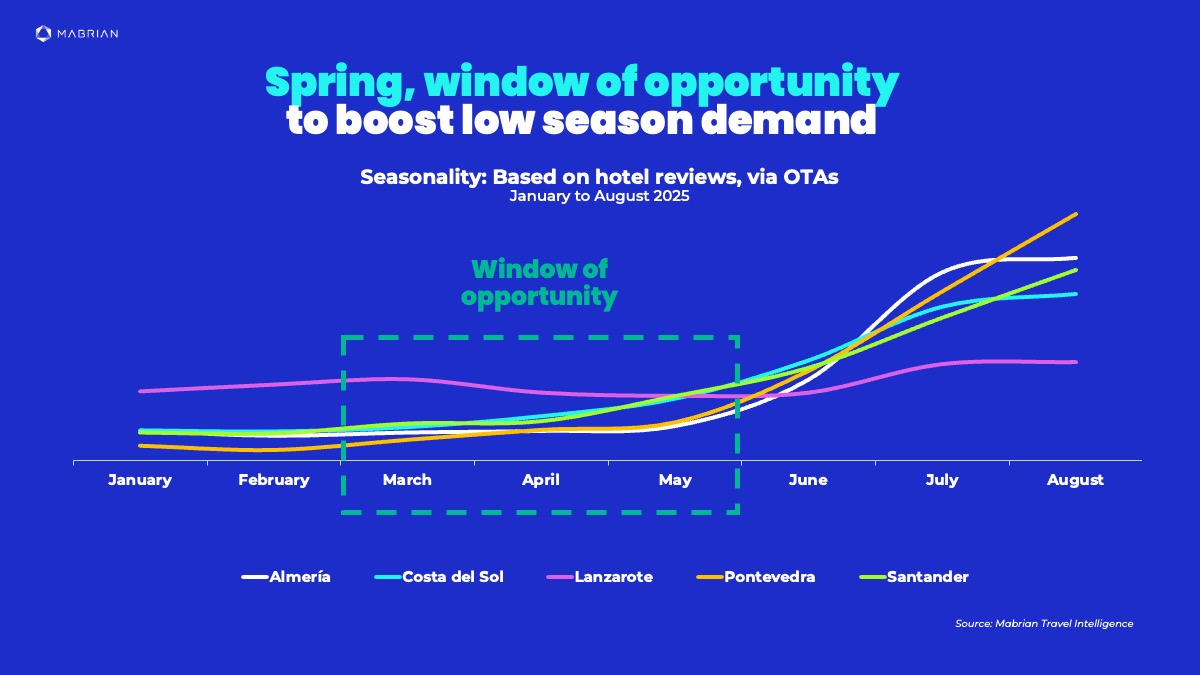
- Spring, particularly between March and June, presents a significant opportunity to promote non-seasonal tourism products and services. This period allows for the highlighting of alternative attractions within destinations, fostering the development and promotion of “linked experiences.” These activities are designed to reflect authenticity and leverage the natural spaces of each destination, generating resonance in demand and encouraging travellers to explore other Spanish coastal destinations through these experiences.
- The study further indicates that travellers express high satisfaction with their experiences on the Spanish coasts throughout the year, including during peak season. Nevertheless, it is crucial to manage reputational risks associated with services that experience the most pressure during high season and consequently generate complaints. The objective is to prevent the perception of the high-season experience from negatively impacting non-seasonal demand.
- Non-seasonal demand drivers include landscapes and nature, a relaxed and calm atmosphere, cleanliness, accessibility and transportation, available services and complementary offerings, and gastronomy. Satisfaction significantly improves when expectations regarding the destination are managed skillfully and transparently, particularly concerning natural environments, including aspects such as water temperature, conditions of natural spaces, or the peculiarities of the surroundings and landscapes.
- Beyond sun and good weather, the demand drivers that define the Spanish coast’s offering—active tourism, well-being, culture, and gastronomy—serve as the foundational pillars for constructing a non-seasonal offering. Leveraging localised, or even niche, experiences centered around these demand drivers is crucial for extending the tourism season. The inclusive tourism segment possesses substantial potential, particularly considering the increase in silver tourism originating from European countries.
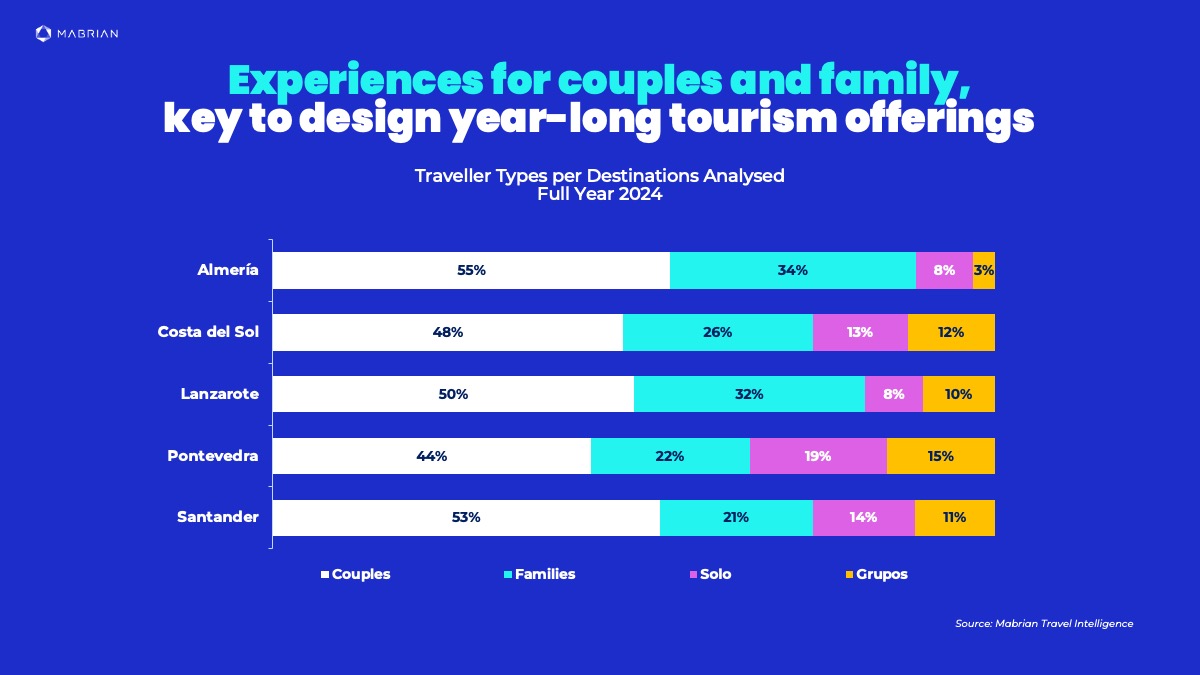
- Generally, couples and families are essential for designing a year-round tourism offering that accurately reflects the specific attractions of each destination, its clearest strengths, and competitive advantages, adapting to their unique needs and interests. The adaptation of tourism products and services is decisive for traveller satisfaction, especially for family tourism, which is highly sensitive to expectations and the ability of destinations to fulfill their requirements.
“In addition to personalising the offering by origin and segments, it is important to deepen collaboration strategies among the destinations that are driving the ‘Playas sin límites’ project, leveraging data intelligence to identify products and experiences that connect the Spanish coast from North to South. Through straightforward collaboration frameworks, fostering extended itineraries and linked experiences, destinations will not only encourage travellers to discover their offerings outside of peak season, but will also contribute to creating opportunities for other destinations within the initiative to diversify demand.”
Cristina Panizo, Head of Mabrian’s Insights & Tourism Advisory Area