

- Data from Mabrian demonstrates that investments in sustainability practices and certifications are profitable for hotels.
We have carried out an in-depth analysis of the performance of hotels in Spain in relation to their level of sustainability certification. As part of this data from more than 14,000 hotels throughout Spain has been analyzed via the main accommodation portals such as Booking.com and TripAdvisor, between the months of April and September 2023.
The sustainability certification of a hotel property has cross-referenced with their average price evolution and the degree of guest satisfaction in them, in comparison to hotels that do not have any certification or sustainability practices published on these portals.
The conclusions drawn from this study are very relevant:
- Firstly, only 32% of hotels in Spain have some level of sustainability certification. And of these, only 6% publish a certification validated by an externally approved certifying entity. The rest offer a level of sustainability practices validated by the portals themselves such as Booking.com and TripAdvisor, which have been divided into three levels: bronze, silver and gold.
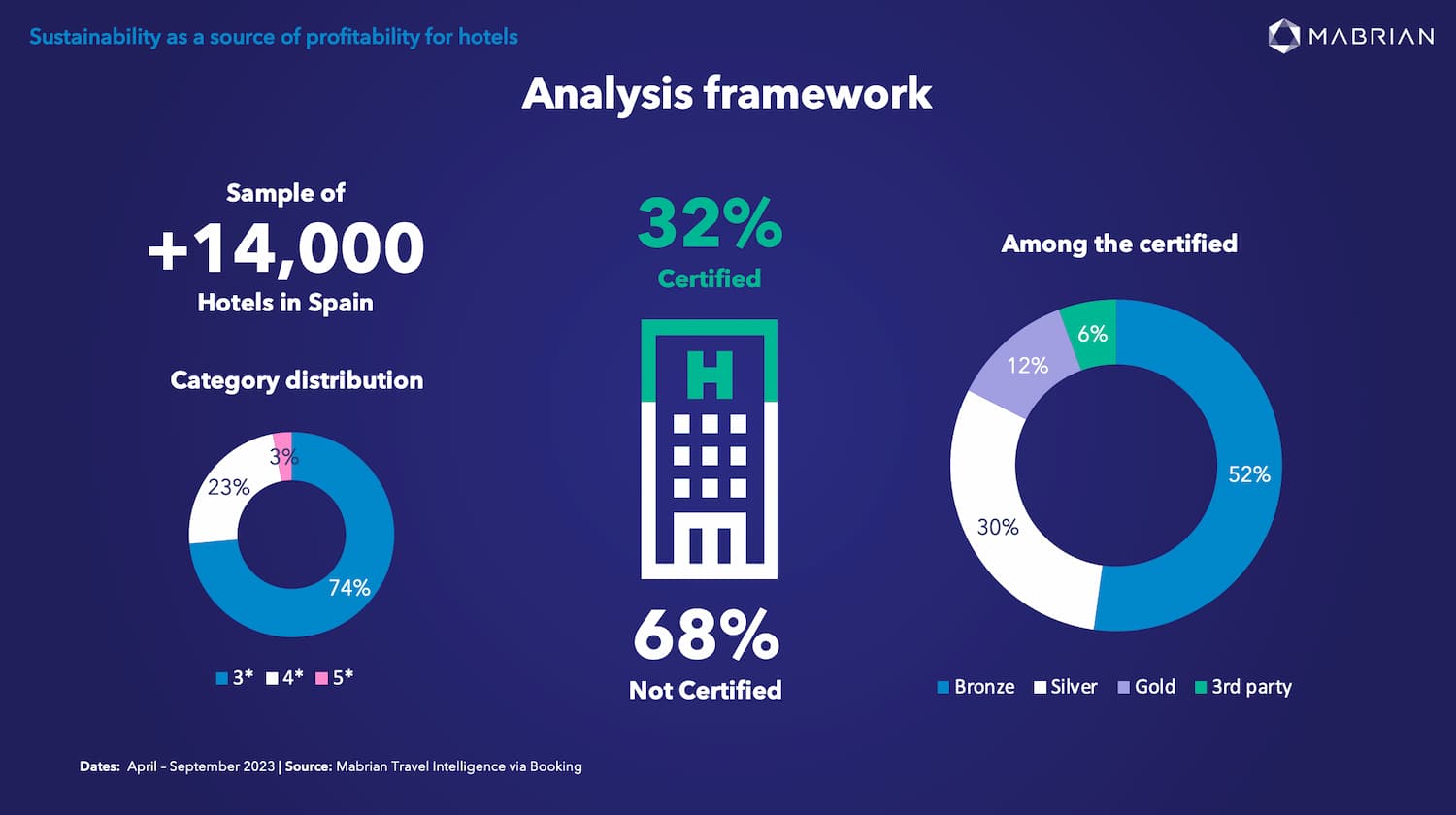
- The analysis shows different degrees of penetration of sustainability certifications among the different hotel categories, 3, 4 and 5 stars. In the case of 3-star establishments, 77% of establishments do not have any certificate or level of sustainable practices published, while this percentage is 47% in 4-star establishments and 32% in 5-star establishments.
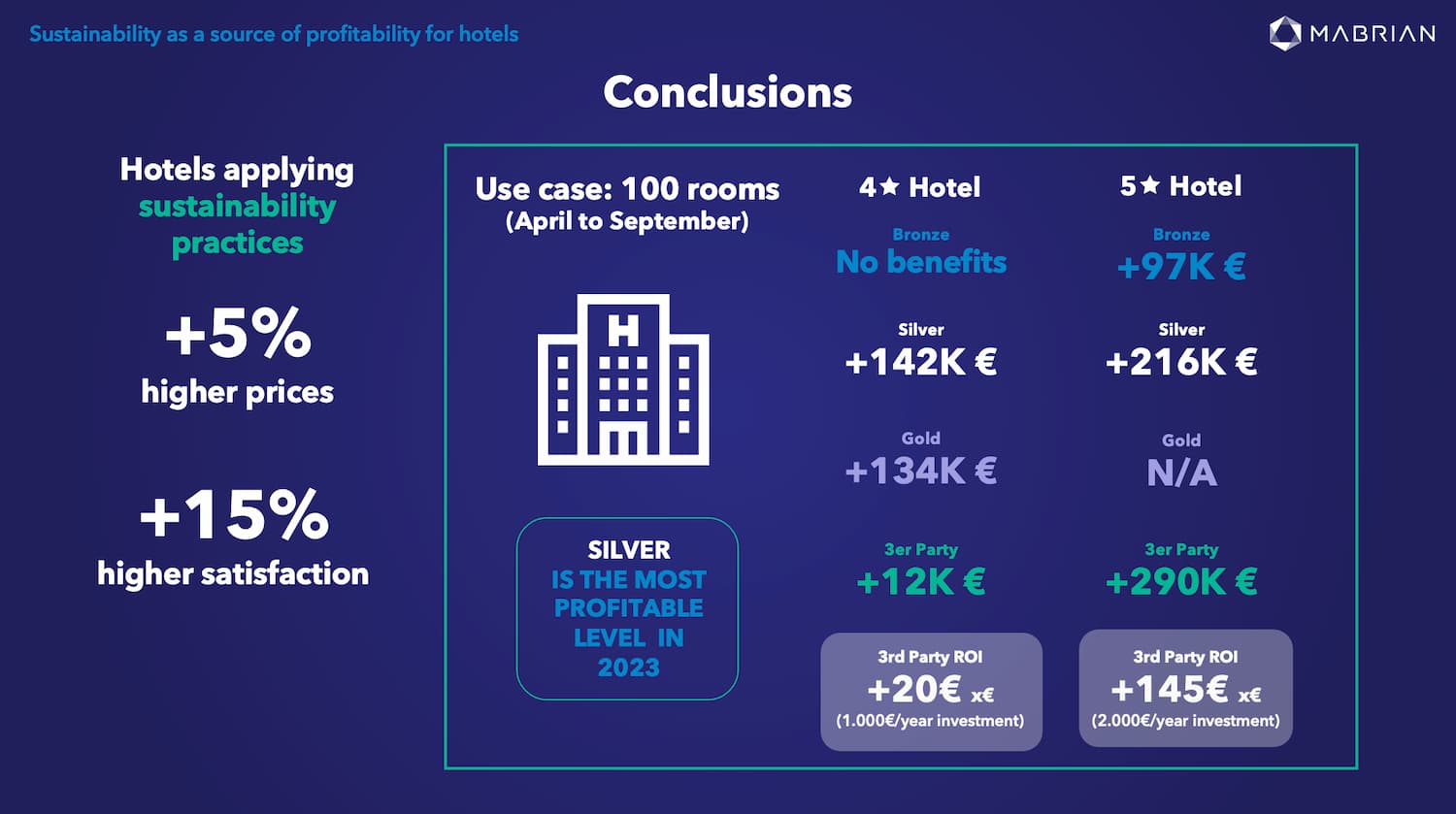
- When analyzing the performance derived from having these certifications, taking into account the average published prices and the customer satisfaction index, a clear generalized pattern is observed: hotels without certificates or a validated level of sustainability are the ones that perform the worst on average. This is considering both lowest prices and those that generate the least satisfaction for their customers, for all categories. In fact, those who do have these certifications sell rooms on average at a price of 5% more expensive and obtain 15% higher satisfaction than those who do not have them.
Our analysis detects notable differences in these sustainability-performance correlations when we analyze each of the hotel categories separately. While the 3-star propertiesshow the best price/satisfaction performance in the intermediate or ‘silver’ level of sustainability, the 4-star properties find their optimal level in the medium-high or ‘gold -“silver” levels of validation of safety practices. sustainability on the part of the portals. In the case of 5-star hotels, the most profitable thing is to have an official external certification.
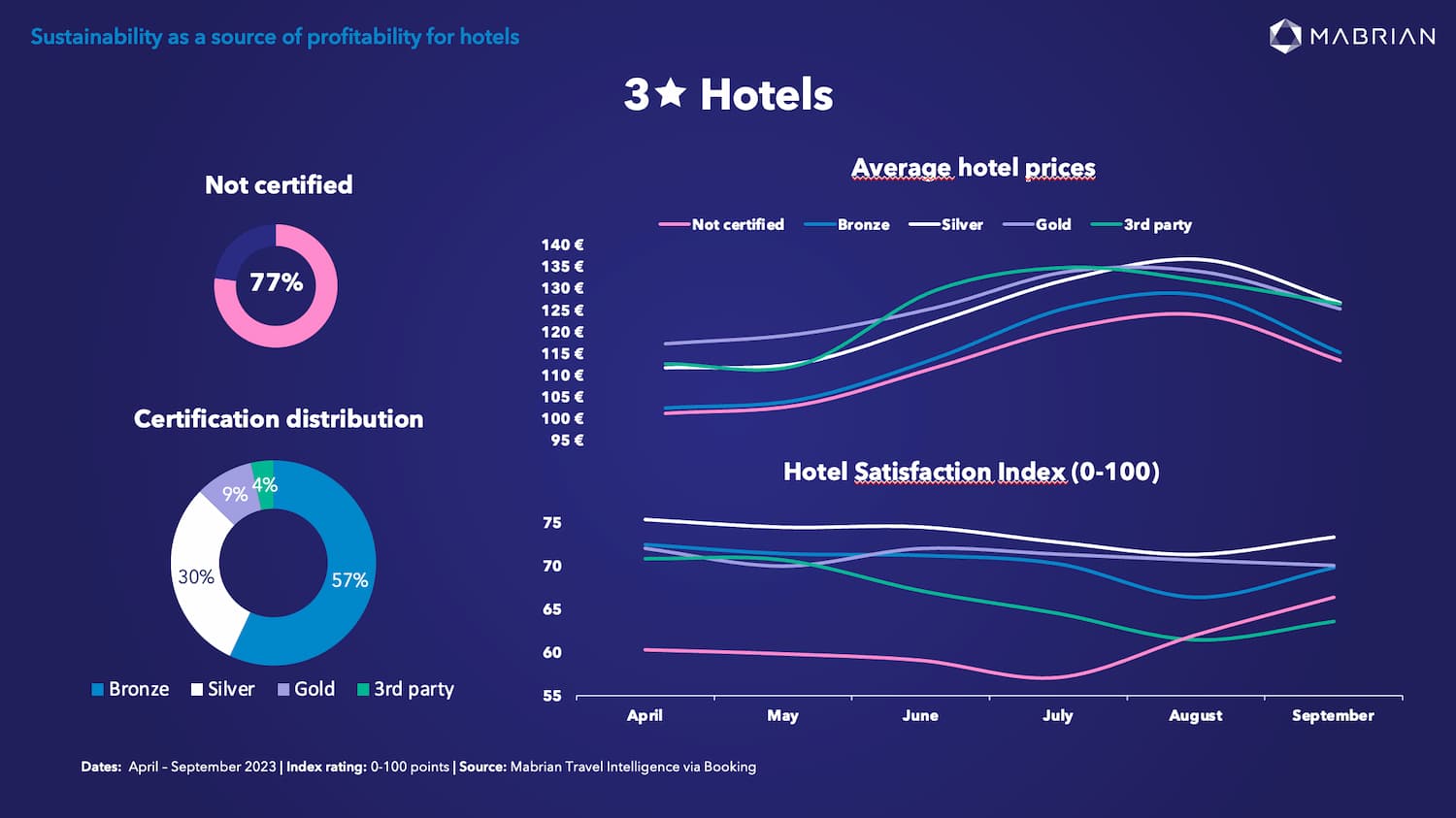
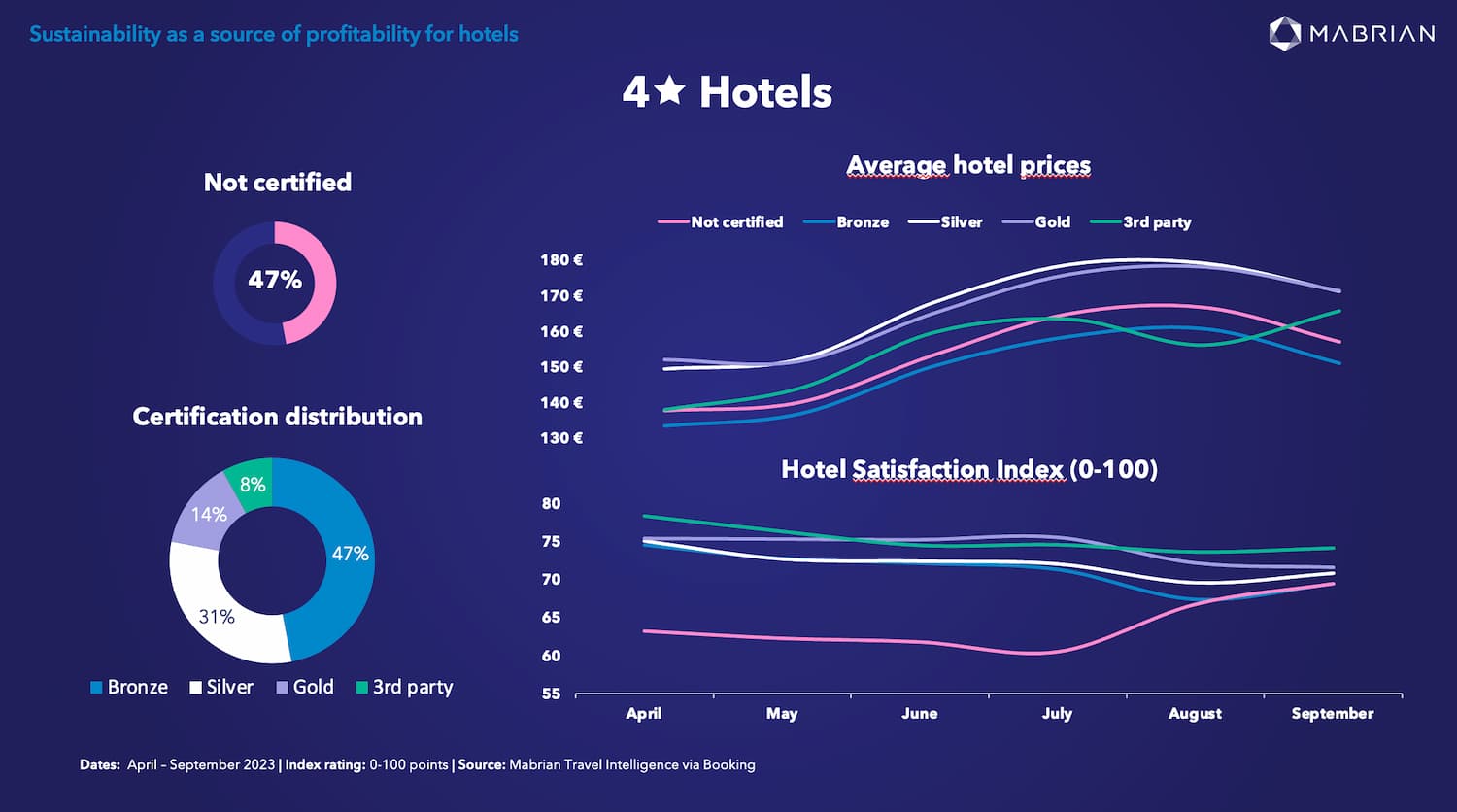
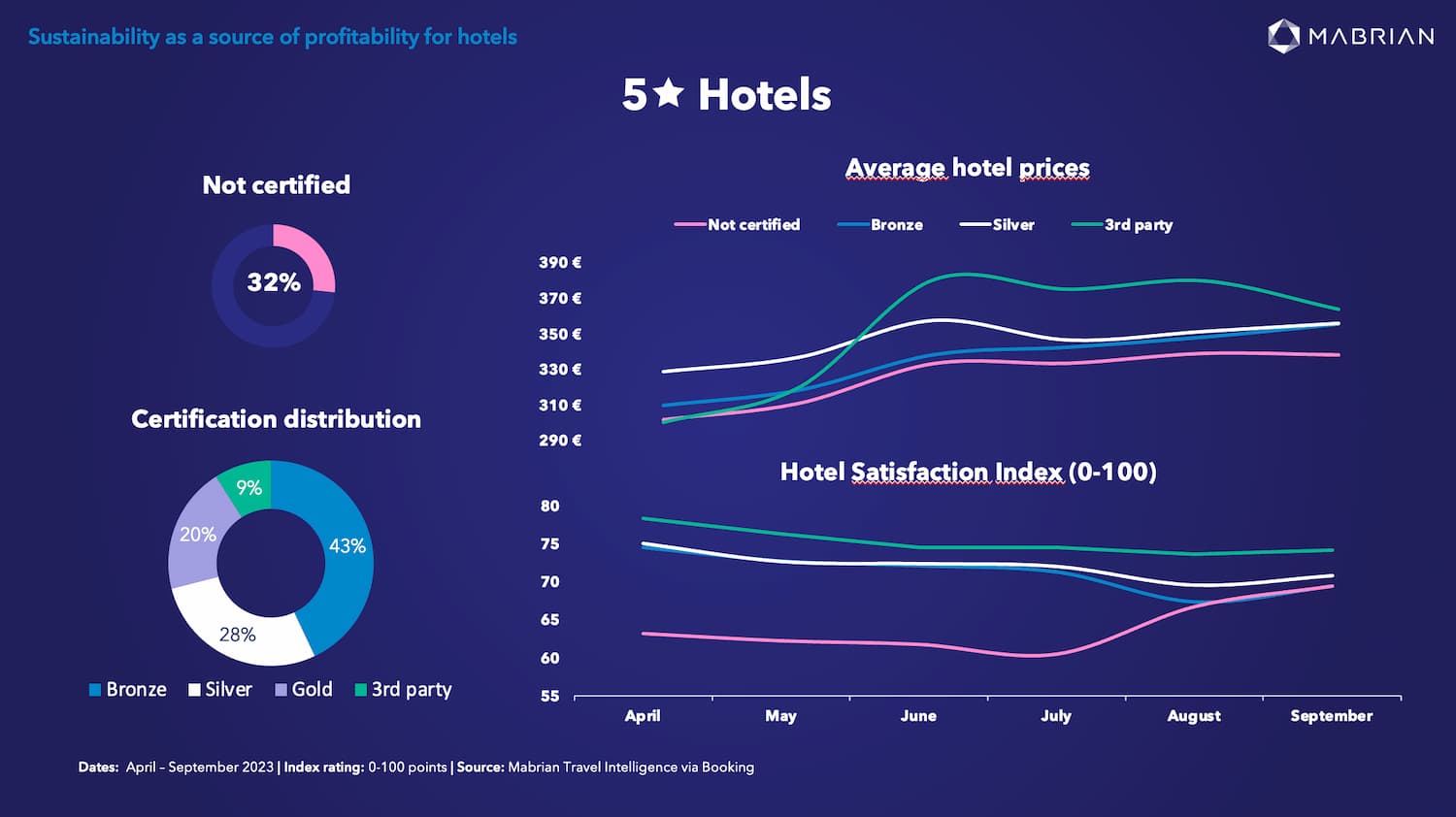
The conclusions of the study are resoundingly clear: the data shows that hotels that make efforts and investments in favor of sustainability are already reaping the benefits through an increase in income, 5% on average, and an improvement in the satisfaction shown by its customers, 15%.
However, the analysis also reveals that currently the level of sustainability validation that is generating the best return for hoteliers on average is the intermediate or ‘silver’ level. The exception would be marked by those luxury hotels that hold high-level external sustainability certifications, which achieve a very relevant performance with a return of up to €145 for every euro invested.
“Sustainability is the main topic discussed in all current tourism forums. However, companies often continue to view efforts in this area as an expense rather than an investment. Therefore, it was very necessary to start measuring the profitability and performance benefits that betting on sustainability means for the hotel sector and thus breaking some false perceptions. It is now proven that it is a win-win. While supporting the sustainability of the destination and the planet, a direct return is obtained in the short term. It is also interesting to note that hoteliers who decide to invest in external sustainability certifications should opt for demanding ones that lead to a high standard of compliance, because this is very well perceived by clients, who are already clearly paying more for this benefit.”
Carlos Cendra, Director of Marketing and Communication at Mabrian